TYPES

In this area, you can learn a lot about the legendary production vehicles of the Jaguar XK series, from the Jaguar XK120 to the Series 3 of the Jaguar E-Type.

We are writing the year 1948, the war has been over for three years. One of the biggest car fairs of the post-war era, the London Motor Show on Earls Court is about to reopen. The show is scheduled for October 27. The Jaguar car manufacturer faces a dilemma. The newly developed 6 cylinder in-line engine XK as well as the chassis have been completed in time, but the body, which is manufactured by the company Pressed Steel, is missing. These three main components are part of a newly developed and fast travel limousine, the Mark VII. Jaguar expects a better deal from the limousine division and wants to introduce the new car at the Motor Show. As it becomes increasingly apparent that the timetable cannot be kept, an emergency solution is being found. Sir William Lyons, founder and master of Jaguar Cars Ltd., has the finished chassis of the MK VII shortened by 18 inches in order to achieve the right wheel distance for a sports car. He designs a matching, elegant open two-seater body on his own. Together with Fred Gardner, his man for practical implementation, he converts this into reality in Foleshill at the back of his work. The venture is only frighteningly short before the fair. This emergency solution will be produced in a small edition of about 200 vehicles to serve potential customers of the London Motor Show and to bridge the time for the introduction of the new MK VII. As you know, however, things are always different from what you think. The new Roadster strikes like a bomb and the orders are so numerous that it more than doubles the target number, not least because of the good price-performance ratio. It was then decided to produce the roadster in series. The Jaguar XK120 was born.


Jaguar XK120 OTS

Jaguar XK120 OTS

Jaguar XK120 OTS

The Roadster goes into production in July 1949, initially with an aluminium body, as the "Jaguar XK120 OTS". The "XK" stands for the type designation of the engine (X-Experimental/K series), the number "120" for the maximum speed, a tradition started before the war. Last but not least, the term "OTS", which stands for "Open Two Seater". For later vehicles, there are often additional optional designations behind the speed designation, such as "SE" for "Special Equipment" or "M" for "Modified", the designation for "Special Equipment" on export vehicles to the USA.

construction time, prices, production figures and vehicle numbers
From July 1949 to September 1954, 7611 vehicles were built, of which the first 240 vehicles are equipped with aluminium bodies, as this raw material is available after the war. Between April and May 1950, the production of aluminium to all-steel body with aluminium doors and hoods was changed. A total of 1173 right-hand-drive (RHD) vehicles and 6438 left-hand-drive (LHD) vehicles will be produced by the end of production. The base price in the United Kingdom is £ 998.-.
The body numbers do not distinguish between left or right-hand-steered vehicles, they are numbered consecutively and start with F1001.
The chassis numbers consist of 6 digit number combinations and differ in those for vehicles with right-hand drive (RHD), starting with the number 660xxx and for vehicles with left-hand steering (LHD). starting with the number 670xxx. Certain chassis numbers have additional letter designations before and after the number combination. These have the following meaning:
Chassis numbers with a leading "S" stand for vehicles of the "Special Equipment" versions.
Built
Chassis No. RHD
Quantity
Chassis No. LHD
Quantity
Body No.*
Comment
July 49 to Dec. 49
660001 to 660027
26
70
F1001 to F1114
No. 660010 goes to the development department without a body (not counted)
Jan. 50 to Dec. 50
660028 to 660518
491
1026
F1120 to F2615
built up to No. 660058 and 670184 with aluminum body / No. 670172 is prototype for first steel body / three chassis for the Lightweight versions (LT) (660741 (LT3), 660748 (LT2, 660917(LT1))
Jan. 51 to Dec. 51
414
671097 to 671796
700
F2604 to F3726
No. 660750 and 660751 go to dealers in Belgium and New Zealand (not counted)
Jan. 52 to Dec. 52
660935 to 661045
111
671797 to 673388
1592
F3734 to F5433
 
Jan. 53 to Dec. 53
661046 to 661153
108
673389 to 674591
1203
F5437 to F6847
 
Jan. 54 to Sept. 54
661154 to 661176
23
674592 to 676438
1847
F6859 to F8718
 
* the bodies were not married to the chassis due to production, so the numbers shown show the lowest or highest body number found in the respective year on http://www.xkdata.com. This gives you a rough assessment of whether the body and chassis are consistent with each other in a direct comparison.
 
The engine numbers are not listed here, as they are not only used in OTS models, but in all Jaguar XK120 types, depending on the order. They start with W1001 and end with W9999. Since these numbers were exhausted in November 1953, the letter "F" is changed and F1001 is also started. According to research in the Jaguar archives, the last engine probably bears the number F4249. The addition -7 or -8 after the number describes the compression ratio of the engine.
changes in production
Over the years of production, technical development did not stop. Economic and technical peculiarities are gradually incorporated into production after extensive consideration. In the following list there are some important adjustments according to chronological order.
Modified
from Model (RHD / LHD)
Description
August 1950
Trailing angle from 5o to 3o. Air filter available as standard.
November 1951
660675 and 671097
Footspace ventilation flaps integrated sideways in the front fenders.
 
660911 and 671493
Ventilation introduced as standard without cooling and defroster nozzles
February 1952
660935 and 671797
Gearbox with short main shaft, longer cardan shaft and modified speedometer drive shaft introduced
 
660935 and 671797
Salisbury 2HA rear axle 3.77:1 mounted on some vehicles
April 1952
660980 and 672049
Self-adjusting front brake jaws, tandem main brake brake sylin derwith with split liquid tank and new brake adjuster introduced
June 1952
660980 and 672049
New revised Newton telescopic shock absorbers mounted on the front axles, with 54 instead of 70 mm diameter.
 
660986 and 672280
New redesigned Girling shock absorbers mounted on the rear axles.
October 1952
661025 and 672963
Stand lamps on the fenders are now integrated into the fenders. Stand lights of the export vehicles also have a flashing function.
 
661026 and 672963
Anti-fitting ventilation openings inserted directly in front of the windscreen and connected to the heating system with flexible hose. (originally intended only for the Fixed Head Coupé).
December 1952
661040 and 673320
Rear springs of the "Special Equipment" (SE) version (C.5721) on all vehicles.
 
661040 and 673320
Vehicle parts are now painted with synthetic resin lacquer. A can of quick-drying synthetic resin lacquers is now part of the vehicle equipment.
 
661037 and 673009
Trico Vacuum Windscreen Washer introduced and retrofitted to three OTS models (661026, 661028, 661029).
 
661040 and 673320
Size width of the steel rim wheels increased to 5.5 inches.
January 1953
661046 and 673396
Rear disc trim with zipper.
 
661046 and 673396
Gearbox tunnel gets a removable lid on the right side for access to the cross joint and lubricating nipple.
April 1953
661054 and 673695
Salisbury 2HA rear axle 3.77:1 is replaced by 4HA 3.54:1. (In German translations, the OTS Model 673693 is mentioned as the first vehicle)
June 1953
661075 and 673995
New rev counter drive shaft
 
661078 and 674006
New speedometer drive shaft
January 1954
661151 and 674415
Cigarette lighters from the MK II sedan (C.5631) are mounted.
September 1954
661165 and 674929
New rev counter drive shaft with black plastic sheathing. The OTS models 661166-661169 and 675031-675607 were omitted.
 
661170 and 675763
Handbrake lever changed
 
Steering column changed and exchanged conical horn knob (C.4514) with flat horn button (C.5558).
 
technical specifications
Here you will find the most important technical data of the Jaguar XK120 OTS, divided into the areas of engine, chassis and performance values.
Engine
Type
Inline 6 cylinder 4 stroke engine
Drive
two overhead camshafts, which are driven by chain
Valves
Valve angle 70o, hanging valves
Bore x Stroke
83 x 106 mm
Displacement
3442 cm3
Performance
119 kw at 5000 rpm
 
134 kw at 5000 rpm at "Special Equipment" version
maximum torque
265 Nm at 2500 rpm
 
275 Nm at 4000 rpm at "Special Equipment" version
Compression ratio
8:1
Cooling
Water
 
Chassis
Brake
front: drum brake
 
rear: drum brake
Transmission
4 gear, synchronized from 2nd gear, transmission via cardan shaft to the rear axle
Suspension
front: Triangular wishbone with rotary rod springs and hydraulic shock absorbers
 
rear: rigid axle with leaf springs and hydraulic lever shock absorbers
Wheelbase
2591 mm
Length
4420 mm
Width
1562 mm
Height
1333 mm
Dry weight
1219 kg
Weight
1321 kg
 
Performance
Maximum speed
193 km/h
Acceleration 0-100 km/h
12.0 sec

Jaguar XK120 FHC

Jaguar XK120 FHC

Jaguar XK120 FHC

In March 1951, almost two and a half years after the first presentation of the Roadster, a closed travel coupe was presented at the Motor Show in Geneva, which is called FHC (Fixed Head Coupé) ex works. The curved shape of the roof is considered very successful and bears some resemblance to the earlier design of the Jaguar SS100 3.5-litre Coupé, which never went into production. The interior was comfortable and luxurious. In addition to a dashboard made of decorative walnut and wool carpets on the floor, there is even a heating system inside, which the roadster has always lacked.

construction time, prices, production figures and vehicle numbers
From July 1951, the actual delivery date of the first vehicle, until September 1954, 2678 vehicles were built. A total of 195 right-hand-drive (RHD) vehicles and 2483 left-hand-drive (LHD) vehicles will be produced by the end of production. The base price in the United Kingdom is £ 1088.-.
The body numbers do not distinguish between left or right-hand-steered vehicles, they are numbered consecutively and start with J1001.
The chassis numbers consist of 6 digit number combinations and differ in those for vehicles with right-hand drive (RHD) starting with the number 669xxx and for vehicles with left-hand drive (LHD) starting with the number 679xxx. Certain chassis numbers have additional letter designations before and after the number combination. These have the following meaning:
Chassis numbers with a leading "S" stand for vehicles of the "Special Equipment" versions.
Built
Chassis No. RHD
Quantity
Chassis No. LHD
Quantity
Body No.*
Comment
July 51 to Dec. 51
669001 to 669002
2
679001 to 679214
214
J1001 to J1208
 
Jan. 52 to Dec. 52
2
679215 to 680571
1357
J1321 to J2576
from September 1952, the chassis numbers start with 680000
Jan. 53 to Dec. 53
107
680572 to 681308
735
J2579 to J3420
Chassis number 681241 and 681242 are not used
Jan. 54 to Sept. 54
84
681309 to 681485
177
J3431 to J3652
 
* the bodies were not married to the chassis due to production, so the numbers shown show the lowest or highest body number found in the respective year on http://www.xkdata.com. This gives you a rough assessment of whether the body and chassis are consistent with each other in a direct comparison.
 
The engine numbers are not listed here, as they are not only used in FHC models, but in all Jaguar XK120 types, depending on the order. They start with W1001 and end with W9999. Since these numbers were exhausted in November 1953, the letter "F" is changed and F1001 is also started. According to research in the Jaguar archives, the last engine probably bears the number F4249. The addition -7 or -8 after the number describes the compression ratio of the engine.
changes in production
Over the years of production, technical development did not stop. Economic and technical peculiarities are gradually incorporated into production after extensive consideration. In the following list there are some important adjustments according to chronological order.
Modified
from Model (RHD / LHD)
Description
February 1952
669003 and 679215
Gearbox with short main shaft, longer cardan shaft and modified speedometer drive shaft introduced
 
669003 and 679222
Salisbury 2HA rear axle 3.77:1 mounted on some vehicles
April 1952
Self-adjusting front brake jaws, tandem main brake brake sylin derwith with split liquid tank and new brake adjuster introduced
June 1952
New revised Newton telescopic shock absorbers mounted on the front axles, with 54 instead of 70 mm diameter.
 
669003 and 679729
New redesigned Girling shock absorbers mounted on the rear axles.
December 1952
Rear springs of the "Special Equipment" (SE) version (C.5721) on all vehicles. Vehicle parts are now painted with synthetic resin lacquer. A can of quick-drying synthetic resin lacquers is now part of the vehicle equipment.
 
Size width of the steel rim wheels increased to 5.5 inches. FHC comes with two keys, glove compartment and luggage compartment get separate key.
 
669003 and 680271
Trico Vacuum Windscreen Washer introduced and retrofitted to three other FHC models (680167, 680168, 680169).
March 1953
669005 and 680738
"Special Equipment" version of the coupé is equipped with single-tube instead of double-tube exhaust system.
April 1953
669007 and 680880
Salisbury 2HA rear axle 3.77:1 is replaced by 4HA 3.54:1.
June 1953
669021 and 681200
New rev counter drive shaft
 
669021 and 681203
New speedometer drive shaft
January 1954
669106 and 681271
Cigarette lighters from the MK II sedan (C.5631) are mounted.
September 1954
669158 and 681466
New rev counter drive shaft with black plastic sheathing
 
669185 and 681471
Handbrake lever changed
 
669194 and 681481
Steering column changed and exchanged conical horn knob (C.4514) with flat horn button (C.5558).
 
technical specifications
Here you will find the most important technical data of the Jaguar XK120 FHC, divided into the areas of engine, chassis and performance values.
Engine
Type
Inline 6 cylinder 4 stroke engine
Drive
two overhead camshafts, which are driven by chain
Valves
Valve angle 70o, hanging valves
Bore x Stroke
83 x 106 mm
Displacement
3442 cm3
Performance
119 kw at 5000 rpm
 
134 kw at 5000 rpm at "Special Equipment" version
maximum torque
264 Nm at 2500 rpm
 
275 Nm at 4000 rpm at "Special Equipment" version
Compression ratio
8:1
Cooling
Water
 
Chassis
Brake
front: drum brake
 
rear: drum brake
Transmission
4 gear, synchronized from 2nd gear, transmission via cardan shaft to the rear axle
Suspension
front: Triangular wishbone with rotary rod springs and hydraulic shock absorbers
 
rear: rigid axle with leaf springs and hydraulic lever shock absorbers
Wheelbase
2591 mm
Length
4420 mm
Width
1562 mm
Height
1359 mm
Dry weight
1295 kg
Weight
1372 kg
 
Performance
Maximum speed
193 km/h
Acceleration 0-100 km/h
9.9 sec

Jaguar XK120 DHC

Jaguar XK120 DHC

Jaguar XK120 DHC

Another year later in April 1953, the convertible, commonly known as the Drop Head Coupé (DHC), finally came out. It has all the amenities of the coupé and has an easy-to-use, lined mohair folding top. The vehicle is an ideal compromise between the coupé and the roadster. Due to the late introduction of the DHC variant, it is on the one hand the most mature model and on the other hand, the one with the lowest production number. Most convertibles, like the roadsters and coupés, are sold on the North American market.

construction time, prices, production figures and vehicle numbers
From April 1953 to September 1954, 1767 vehicles were built. A total of 295 right-hand-drive (RHD) vehicles and 1472 left-hand-drive (LHD) vehicles will be produced by the end of production. The base price in the United Kingdom is £ 1160.-.
The body numbers do not distinguish between left or right-hand-steered vehicles, they are numbered consecutively and start with P1001.
The chassis numbers consist of 6 digit number combinations and differ in those for vehicles with right-hand drive (RHD) starting with the number 667xxx and for vehicles with left-hand drive (LHD) starting with the number 677xxx. Certain chassis numbers have additional letter designations before and after the number combination. These have the following meaning:
Chassis numbers with a leading "S" stand for vehicles of the "Special Equipment" versions.
Built
Chassis No. RHD
Quantity
Chassis No. LHD
Quantity
Body No.*
Comment
June 52
1
 
0
P1001
this first vehicle is the prototype
April 53 to Dec. 53
667002 to 667168
167
1102
P1002 to P2271
 
Jan. 54 to Sept. 54
667169 to 667295
127
678103 to 678472
370
P2289 to P2762
 
* the bodies were not married to the chassis due to production, so the numbers shown show the lowest or highest body number found in the respective year on http://www.xkdata.com. This gives you a rough assessment of whether the body and chassis are consistent with each other in a direct comparison.
 
The engine numbers are not listed here, as they are not only used in DHC models, but in all Jaguar XK120 types, depending on the order. They start with W1001 and end with W9999. Since these numbers were exhausted in November 1953, the letter "F" is changed and F1001 is also started. According to research in the Jaguar archives, the last engine probably bears the number F4249. The addition -7 or -8 after the number describes the compression ratio of the engine.
changes in production
Over the years of production, technical development did not stop. Economic and technical peculiarities are gradually incorporated into production after extensive consideration. In the following list there are some important adjustments according to chronological order.
Modified
from Model (RHD / LHD)
Description
April 1953
Salisbury 2HA rear axle 3.77:1 is replaced by 4HA 3.54:1.
June 1953
New rev counter drive shaft
 
New speedometer drive shaft
January 1954
667161 and 678085
Cigarette lighters from the MK II sedan (C.5631) are mounted.
September 1954
New rev counter drive shaft with black plastic sheathing
 
667271 and 678390
Handbrake lever changed
 
667280 and 678418
Steering column changed and exchanged conical horn knob (C.4514) with flat horn button (C.5558).
 
technical specifications
Here you will find the most important technical data of the Jaguar XK120 DHC, divided into the areas of engine, chassis and performance values.
Engine
Type
Inline 6 cylinder 4 stroke engine
Drive
two overhead camshafts, which are driven by chain
Valves
Valve angle 70o, hanging valves
Bore x Stroke
83 x 106 mm
Displacement
3442 cm3
Performance
119 kw at 5000 rpm
 
134 kw at 5000 rpm at "Special Equipment" version
maximum torque
264 Nm at 2500 rpm
 
275 Nm at 4000 rpm at "Special Equipment" version
Compression ratio
8:1
Cooling
Water
 
Chassis
Brake
front: drum brake
 
rear: drum brake
Transmission
4 gear, synchronized from 2nd gear, transmission via cardan shaft to the rear axle
Suspension
front: Triangular wishbone with rotary rod springs and hydraulic shock absorbers
 
rear: rigid axle with leaf springs and hydraulic lever shock absorbers
Wheelbase
2591 mm
Length
4420 mm
Width
1562 mm
Height
1359 mm
Dry weight
1346 kg
Weight
1397 kg
 
Performance
Maximum speed
191 km/h
Acceleration 0-100 km/h
12.5 sec

Due to the many technical innovations, which have been gained in motorsport but also from the experience with the previous model, it is time to bring a successor model to the market after six successful years of production. 1954 at the London Motor Show on Earls Court, it is time again, Jaguar presents the XK140. The result surprises only a few, what one wants to change in terms of appearance, especially the optics were already part of the success concept with the predecessor. With the chassis and the body, everything with its elegantly curved sideline stays the same. The export, especially to America, continues even after 6 years and so one corresponds to the customer's desire for more Chrome, which is very popular in the 50's. It comes with large, one-piece bumpers, trims and only 7 wide, instead of the 13 narrow longitudinal struts in the radiator grille. In the future, a Jaguar emblem will be emblazoned on the trunk, reminiscent of the victories at Le Mans. Even today, many years later, it will be said that this decision was a great admission to the market. Due to the further development of the engine, driven by commitment in motorsport, the driver is now pleased with 190 horsepower. The sport version (SE version) is equipped with the new cylinder heads of the XK120C short C-Type, which increases the horsepower to 210. The removal of the battery and the installation of the engine block by 76mm forward provides additional space in the interior. Thanks to the won space, a Laycock de Normanville Overdrive is now also available, as well as a three-speed automatic transmission from the company Borg-Warner for coupé and convertible from October 1956. The model variants remain unchanged. There is also an "Open Two Seater" (Roadster), a "Fixed Head Coupé", as well as a "Drop Head Coupé" (Cabrio). The production time of the XK140 will take just over two and a half years.


Jaguar XK140 OTS

Jaguar XK140 OTS

Jaguar XK140 OTS (Copyright by Hugh Ilewelyn)

The Roadster, produced from October 1954, sells very well, especially in the USA, and is more popular there than its sister models. In contrast to the motherland, for which only 73 right-hand-drive roads are built, of which only 47 remain in the Kingdom of Great Britain. Maginal but strikingly beautiful: for the domestic market, the spoke wheels are often painted in the colour of the car body. Unlike the coupé and convertible, the additional space gained is not extended by two emergency seats in the rear area, it is good for the foot space. The roadster remains a pure two-seater.

construction time, prices, production figures and vehicle numbers
From October 1954 to February 1957, 3354 vehicles were built. A total of 73 right-hand-drive (RHD) vehicles and 3281 left-hand-drive (LHD) vehicles will be produced by the end of production. The base price in the United Kingdom is £ 1127.-.
The body numbers do not distinguish between left or right-hand-steered vehicles, they are numbered consecutively and start with F10001.
The chassis numbers consist of 6 digit number combinations and differ in those for vehicles with right-hand drive (RHD) starting with the number 800xxx and for vehicles with left-hand drive (LHD) starting with the number 810xxx. Certain chassis numbers have additional letter designations before and after the number combination. These have the following meaning:
Chassis numbers with a leading "A" stand for vehicles of the "Special Equipment" versions, referred to in America as XK140 M.
Chassis numbers with a leading "S" stand for vehicles of the "Special Equipment" versions, with C-Type cylinder heads, referred to in America as the XK140 MC.
Chassis numbers with a trailing "DN" stand for vehicles with built-in "overdrive"." DN" stands for the inventor of the Laycock Overdrive, De Normanville.
Chassis numbers with a trailing "BW" stand for vehicles with built-in automatic transmissions. "BW" stands for the manufacturer Borg Warner.
Built
Chassis No. RHD
Quantity
Chassis No. LHD
Quantity
Body No.*
Comment
Oct. 54 to Dec. 54
8
810001 to 810617
617
F10001 to F10431
No. 814001 goes to the development department without a body (not counted)
Jan. 55 to Dec. 55
54
810618 to 811987
1370
F10629 to F12046
 
Jan. 56 to Dec. 56
12
811988 to 813121
1134
F12048 to F13180
In October 1956, the last RHD with the number 800074 is produced.
Jan. 57 to Feb. 57
 
0
161
F13198 to F13313
 
* the bodies were not married to the chassis due to production, so the numbers shown show the lowest or highest body number found in the respective year on http://www.xkdata.com. This gives you a rough assessment of whether the body and chassis are consistent with each other in a direct comparison.
 
The engine numbers are not listed here, as depending on the order they are not only installed in OTS models, but in all Jaguar XK140 types, they start with the designation G1001. Some of the first Jaguar XK140 stake still uses engines from the XK120 production. In total, it is a Jaguar XK140 OTS (LHD) whose engine starts with the letter "F". According to research in the Jaguar archives, the last engine probably bears the number G9980. The addition -8 or -9 after the number describes the compression ratio of the engine. An additional "S" directly behind the compression ratio is available for C-Type cylinder heads ex works.
changes in production
Over the years of production, technical development did not stop. Economic and technical peculiarities are gradually incorporated into production after extensive consideration. In the following list there are some important adjustments according to chronological order.
Modified
from Model (RHD / LHD)
Description
March 1955
800022 and 811193
Fixing nut in the cardan shaft flange on the differential with fuse plate. Applies to vehicles with overdrive and 4.09:1 translated rear axle.
June 1955
800025 and 811284
New wheel brake cylinders (parts number 39677) introduced at the rear
 
800031 and 811382
Relays are integrated into the overdrive control circuit
 
800037 and 811424
Cooler C.9619 with new bracket C.8830 introduced
September 1955
800052 and 811562
Torque of steering is reduced. The trailing angle is shortened from 2.1/2o-3o to 1.1/2o-2o.
December 1955
Throttle valve switch introduced on vehicles with overdrive.
Prevents switching from the overdrive to the highest gear, when braking with closed throttle valves.
April 1956
800071 and 812311
Reinforcement of the rear-axle drive in the differential housing for road stars with standard gearbox from 9.5 to 11 mm
September 1956
800072 and 812647
New handbrake lever introduced
 
technical specifications
Here you will find the most important technical data of the Jaguar XK140 OTS, divided into the areas of engine, chassis and performance values.
Engine
Type
Inline 6 cylinder 4 stroke engine
Drive
two overhead camshafts, which are driven by chain
Valves
Valve angle 70o, hanging valves
Bore x Stroke
83 x 106 mm
Displacement
3442 cm3
Performance
142 kw at 5500 rpm
 
157 kw at 5750 rpm at "Special Equipment" version
maximum torque
285 Nm at 2500 rpm
 
289 Nm at 4000 rpm at "Special Equipment" version
Compression ratio
8:1
Cooling
Water
 
Chassis
Brake
front: drum brake
 
rear: drum brake
Transmission
4 gear, synchronized from 2nd gear, transmission via cardan shaft to the rear axle
Suspension
front: Triangular wishbone with rotary rod springs and hydraulic shock absorbers
 
rear: rigid axle with leaf springs and hydraulic telescopic shock absorbers
Wheelbase
2591 mm
Length
4470 mm
Width
1575 mm
Height
1346 mm
Dry weight
1245 kg
Weight
1372 kg
 
Performance
Maximum speed
195 km/h
 
208 km/h at "Special Equipment" version
Acceleration 0-100 km/h
9 sec
 
8.4 sec on "Special Equipment" version

Jaguar XK140 FHC

Jaguar XK140 FHC

Jaguar XK140 FHC - Copyright by Steve Harris

The coupé comes on the market at the same time as the Roadster and the Drop Head Coupé and undergoes the most major changes. Due to the magnification of the interior, it is equipped with larger side and larger rear window, for better all-round visibility. In order to achieve the magnification, the spray wall, which now encloses the rear part of the engine, and the A-pillar with window front is moved forward. The bonnet is shortened somewhat according to the total length. In the rear, two emergency seats are created, which makes it a 2+2 seater and more space in the footwell.

construction time, prices, production figures and vehicle numbers
From October 1954 to February 1957, 2808 vehicles were built. A total of 843 right-hand-drive (RHD) vehicles and 1965 left-hand-drive (LHD) vehicles will be produced by the end of production. The base price in the United Kingdom is £ 1140.-.
The body numbers do not distinguish between left or right-hand-steered vehicles, they are numbered consecutively and start with J4001.
The chassis numbers consist of 6 digit number combinations and differ in those for vehicles with right-hand drive (RHD) starting with the number 804xxx and for vehicles with left-hand drive (LHD) starting with the number 814xxx. Certain chassis numbers have additional letter designations before and after the number combination. These have the following meaning:
Chassis numbers with a leading "A" stand for vehicles of the "Special Equipment" versions, referred to in America as XK140 M.
Chassis numbers with a leading "S" stand for vehicles of the "Special Equipment" versions, with C-Type cylinder heads, referred to in America as the XK140 MC.
Chassis numbers with a trailing "DN" stand for vehicles with built-in "overdrive"." DN" stands for the inventor of the Laycock Overdrive, De Normanville.
Chassis numbers with a trailing "BW" stand for vehicles with built-in automatic transmissions. "BW" stands for the manufacturer Borg Warner.
Built
Chassis No. RHD
Quantity
Chassis No. LHD
Quantity
Body No.*
Comment
Oct. 54 to Dec. 54
6
814001 to 814003
3
J4001 to J4006
No. 814001 goes to the development department without a body (not counted)
Jan. 55 to Dec. 55
804007 to 804591
585
814004 to 815268
1265
J4007 to J5848
 
Jan. 56 to Dec. 56
252
693
J5864 to J6803
In November 1956, the last RHD with the number 804843 is produced.
Jan. 57 to Feb. 57
 
0
815962 to 815966
5
J6804 to J6808
 
* the bodies were not married to the chassis due to production, so the numbers shown show the lowest or highest body number found in the respective year on http://www.xkdata.com. This gives you a rough assessment of whether the body and chassis are consistent with each other in a direct comparison.
 
The engine numbers are not listed here, as depending on the order they are not only used in FHC models, but in all Jaguar XK140 types, they start with the designation G1001. Some of the first Jaguar XK140 stake still uses engines from the XK120 production. In total, there are four Jaguar XK140 FHC (RHD) whose engines begin with the letter "F". According to research in the Jaguar archives, the last engine probably bears the number G9980. The addition -7 or -8 after the number describes the compression ratio of the engine. An additional "S" directly behind the compression ratio is available for C-Type cylinder heads ex works.
changes in production
Over the years of production, technical development did not stop. Economic and technical peculiarities are gradually incorporated into production after extensive consideration. In the following list there are some important adjustments according to chronological order.
Modified
from Model (RHD / LHD)
Description
March 1955
804031 and 814053
Fixing nut in the cardan shaft flange on the differential with fuse plate. Applies to vehicles with overdrive and 4.09:1 translated rear axle.
June 1955
804020 and 814035
Cooler C.7523 with new bracket C.8830 introduced.
The fan wheel with a diameter of 394 mm is replaced by a larger one with a diameter of 406 mm.
 
New wheel brake cylinders (parts number 39677) introduced at the rear
 
804121 and 814216
Relays are integrated into the overdrive control circuit
 
804124 and 814241
New cooler C.9619 is introduced
September 1955
804308 and 814532
Torque of steering is reduced. The trailing angle is shortened from 2.1/2o-3o to 1.1/2o-2o.
December 1955
804523 and 815252
Throttle valve switch introduced on vehicles with overdrive.
Prevents switching from the overdrive to the highest gear, when braking with closed throttle valves.
April 1956
804676 and 815528
Reinforcement of the rear-axle drive in the differential housing from 9.5 to 11 mm
September 1956
804767 and 815755
New handbrake lever introduced
October 1956
804781 and 815773
Steel doors with wooden frame introduced
 
technical specifications
Here you will find the most important technical data of the Jaguar XK140 FHC, divided into the areas of engine, chassis and performance values.
Engine
Type
Inline 6 cylinder 4 stroke engine
Drive
two overhead camshafts, which are driven by chain
Valves
Valve angle 70o, hanging valves
Bore x Stroke
82 x 106 mm
Displacement
3442 cm3
Performance
142 kw at 5500 rpm
 
157 kw at 5750 rpm at "Special Equipment" version
maximum torque
285 Nm at 2500 rpm
 
289 Nm at 4000 rpm at "Special Equipment" version
Compression ratio
8:1
Cooling
Water
 
Chassis
Brake
front: drum brake
 
rear: drum brake
Transmission
4 gear, synchronized from 2nd gear, transmission via cardan shaft to the rear axle
Suspension
front: Triangular wishbone with rotary rod springs and hydraulic shock absorbers
 
rear: rigid axle with leaf springs and hydraulic telescopic shock absorbers
Wheelbase
2591 mm
Length
4470 mm
Width
1638 mm
Height
1397 mm
Dry weight
1308 kg
Weight
1422 kg
 
Performance
Maximum speed
195 km/h
 
208 km/h at "Special Equipment" version
Acceleration 0-100 km/h
11 sec
 
9 sec at "Special Equipment" version

Jaguar XK140 DHC

Jaguar XK140 DHC

Jaguar XK140 DHC

The Drop Head Coupé is by no means just a modified XK140 coupé with top, although it also has two emergency seats, while the XK120 Drop Head Coupé was a pure two-seater. Unlike the XK140 Coupé, the space for this is not created by changes to the spray wall, A-pillar and windshield, but only by the general installation of the engine block and a reduction in the trunk. The proportions of the doors and the top remain almost identical to the previous model. Only in the case of the convertible is the two 6 volt batteries behind the seats, a 12 volt block in the engine compartment.

construction time, prices, production figures and vehicle numbers
From October 1954 to February 1957, 2789 vehicles were built. A total of 479 right-hand-drive (RHD) vehicles and 2310 left-hand-drive (LHD) vehicles will be produced by the end of production. The base price in the United Kingdom is £ 1160.-.
The body numbers do not distinguish between left or right-hand-steered vehicles, they are numbered consecutively and start with P3001.
The chassis numbers consist of 6 digit number combinations and differ in those for vehicles with right-hand drive (RHD) starting with the number 807xxx and for vehicles with left-hand drive (LHD) starting with the number 817xxx. Certain chassis numbers have additional letter designations before and after the number combination. These have the following meaning:
Chassis numbers with a leading "A" stand for vehicles of the "Special Equipment" versions, referred to in America as XK140 M.
Chassis numbers with a leading "S" stand for vehicles of the "Special Equipment" versions, with C-Type cylinder heads, referred to in America as the XK140 MC.
Chassis numbers with a trailing "DN" stand for vehicles with built-in "overdrive"." DN" stands for the inventor of the Laycock Overdrive, De Normanville.
Chassis numbers with a trailing "BW" stand for vehicles with built-in automatic transmissions. "BW" stands for the manufacturer Borg Warner.
Built
Chassis No. RHD
Quantity
Chassis No. LHD
Quantity
Body No.*
Comment
Oct. 54 to Dec. 54
6
111
P3001 to P3118
 
Jan. 55 to Dec. 55
336
817112 to 818239
1128
P3121 to P4577
No. 807312 is the first with automatic transmission / No. 817378 is damaged on the transport to the dealer and rebuilt as RHD
Jan. 56 to Dec. 56
137
818240 to 819304
1065
P4588 to P5785
 
Jan. 57 to Feb. 57
1
7
P5789 to P5796
 
* the bodies were not married to the chassis due to production, so the numbers shown show the lowest or highest body number found in the respective year on http://www.xkdata.com. This gives you a rough assessment of whether the body and chassis are consistent with each other in a direct comparison.
 
The engine numbers are not listed here, as depending on the order they are not only installed in DHC models, but in all Jaguar XK140 types, they start with the designation G1001. Some of the first Jaguar XK140 stake still uses engines from the XK120 production. In total, there are two Jaguar XK140 DHC (RHD) whose engines begin with the letter "F". According to research in the Jaguar archives, the last engine probably bears the number G9980. The addition -7 or -8 after the number describes the compression ratio of the engine. An additional "S" directly behind the compression ratio is available for C-Type cylinder heads ex works.
changes in production
Over the years of production, technical development did not stop. Economic and technical peculiarities are gradually incorporated into production after extensive consideration. In the following list there are some important adjustments according to chronological order.
Modified
from Model (RHD / LHD)
Description
March 1955
807047 and 817268
Fixing nut in the cardan shaft flange on the differential with fuse plate. Applies to vehicles with overdrive and 4.09:1 translated rear axle.
June 1955
807080 and 817356
New wheel brake cylinders (parts number 39677) introduced at the rear
 
807113 and 817426
Relays are integrated into the overdrive control circuit
 
807128 and 817460
Cooler C.9619 with new bracket C.8830 introduced
September 1955
Torque of steering is reduced. The trailing angle is shortened from 2.1/2o-3o to 1.1/2o-2o.
December 1955
Throttle valve switch introduced on vehicles with overdrive.
Prevents switching from the overdrive to the highest gear, when braking with closed throttle valves.
April 1956
Reinforcement of the rear-axle drive in the differential housing from 9.5 to 11 mm
September 1956
807441 and 818729
New handbrake lever introduced
October 1956
807447 and 818796
Steel doors with wooden frame introduced
 
technical specifications
Here you will find the most important technical data of the Jaguar XK140 DHC, divided into the areas of engine, chassis and performance values.
Engine
Type
Inline 6 cylinder 4 stroke engine
Drive
two overhead camshafts, which are driven by chain
Valves
Valve angle 70o, hanging valves
Bore x Stroke
83 x 106 mm
Displacement
3442 cm3
Performance
142 kw at 5000 rpm
 
157 kw at 5000 rpm at "Special Equipment" version
maximum torque
285 Nm at 2500 rpm
 
289 Nm at 4000 rpm at "Special Equipment" version
Compression ratio
8:1
Cooling
Water
 
Chassis
Brake
front: drum brake
 
rear: drum brake
Transmission
4 gear, synchronized from 2nd gear, transmission via cardan shaft to the rear axle
Suspension
front: Triangular wishbone with rotary rod springs and hydraulic shock absorbers
 
rear: rigid axle with leaf springs and hydraulic telescopic shock absorbers
Wheelbase
2591 mm
Length
4470 mm
Width
1575 mm
Height
1346 mm
Dry weight
1359 kg
Weight
1473 kg
 
Performance
Maximum speed
195 km/h
 
201 km/h at "Special Equipment" version
Acceleration 0-100 km/h
9 sec
 
8.4 sec on "Special Equipment" version

At the beginning of 1957, Jaguar was faced with the following situation. Sales of the Jaguar XK140 are at a new low. No wonder, vehicles without self-protruding bodywork already radiate the touch of the past. Since the xK120 was unveiled at the Motor Show on Earls Court, nearly 10 years have passed and the development in design and technology has overtaken the Jaguar XK. This can already be seen on the Jaguar XK-SS, which at the same time drives the streets in small numbers and emerged from the racing legend Jaguar D-Type. Then, on 12 February 1957, a major fire destroyed a large part of the Coventry plant, which is the hardest hit by the new sports car production. At a time when the old is no longer good enough and the new is not yet ready for the market, a decision has to be made, a final "facelift" has to be made. In mid-1957, the successor, the XK150, was launched. The Jaguar XK150 differs significantly from its predecessor in its exterior. The slender fast sports car has become a Tourer. but one that will take it far on the part of motorization. First of all, the 3.4 litre X140 engine with 190 hp is available, from which a 20 hp stronger version is created due to the newly developed B-Type cylinder head. With the delayed introduction of the "Open Two Seater" a 250 hp engine generation, the "S" version, will be added at the same time. Recognizable from the outside by a small "S" with solid line on the car door, under the hood by three large 2 inch S.U. HD8 carburettors, which are required by the newly developed "straight port" cylinder head Harry Weslakes. At the beginning of 1959 a 3.8 litre version follows, which is also available as an "S" version. Thanks to its strong engine, the XK150 is the first production vehicle to be fully equipped with Dunlop disc brakes. The XK150 will be the last of its kind, in the successor model the new direction will finally break through with brute force, the Jaguar E-Type.


Jaguar XK150 OTS

Jaguar XK150 OTS

Jaguar XK150 OTS (Copyright by Otis Blank)

In March 1958, with a delay of 10 months, the 40kg lighter Open Two Seater will be presented at the Paris Motor Show. In order to make the long bonnet more visible, the windshield is set further back. The rear also looks stretched as it is led to the front seats. This creates additional space for luggage and the simple folding roof. Of the spartanity inside, as was common with the XK120 and XK140, there is no trace in the new. Instead of pluggable side windows, it comes with built-in crank side windows as well as with door handles and armrests instead of drawstring ropes.

construction time, prices, production figures and vehicle numbers
From March 1958 to October 1960, 2265 vehicles were built. A total of 92 right-hand-drive (RHD) vehicles and 2173 left-hand-drive (LHD) vehicles will be produced by the end of production. The base price in the United Kingdom is £ 1175.-. For the more powerful engine, the "S" version, there will be an additional charge of around £ 282.-. In 1959, the 3.8-litre engine was added, for which the base prices are £ 1457.- and £ 1535.- respectively, for the "S" version.
The body numbers do not distinguish between left or right-hand-steered vehicles, they are numbered consecutively and start with F15001.
The chassis numbers consist of 6 digit number combinations and differ in those for vehicles with right-hand drive (RHD) starting with the number 820xxx and for vehicles with left-hand drive (LHD) starting with the number 830xxx. Certain chassis numbers have additional letter designations before and after the number combination. These have the following meaning:
Chassis numbers with a leading "S" stand for vehicles of the "Special Equipment" versions.
Chassis numbers with a leading "T" stand for vehicles of the "Special Equipment" versions, equipped with the large 3.8 litre engine.
Chassis numbers with a trailing "DN" stand for vehicles with built-in "overdrive"." DN" stands for the inventor of the Laycock Overdrive, De Normanville.
Chassis numbers with a trailing "BW" stand for vehicles with built-in automatic transmissions. "BW" stands for the manufacturer Borg Warner.
Built
Chassis No. RHD
Quantity
Chassis No. LHD
Quantity
Body No.*
Comment
Sep. 57
 
0
1
F15001
this first vehicle is the prototype
March 58 to Dec. 58
19
830002 to 831923
1922
F15005 to F16870
in Oct. 58 the No. 820003 is produced as the first RHD for the domestic market
Jan. 59 to Dec. 59
47
190
F16948 to F17189
No. 832110 is the first XK150 with 3.8S liter engine, delivered to Germany, No. 832112 with 3.8 liter engine for Panama
Jan. 60 to Oct. 60
27
61
F17190 to F17238
 
* the bodies were not married to the chassis due to production, so the numbers shown show the lowest or highest body number found in the respective year on http://www.xkdata.com. This gives you a rough assessment of whether the body and chassis are consistent with each other in a direct comparison.
 
The engine numbers are not listed here, as depending on the order they are not only installed in OTS models, but in all Jaguar XK150 types, they start with the designation V1001 for the 3.4 liter engines, VS1001 for the 3.4S liter engines, VA1001 for the 3.8 liter engines and VAS1001 for the 3.8S liter engines. According to research in the Jaguar archives, the last engines probably bear the number V7660, VS2210, VA2297 and VAS1291 as well as VAS1312. The addition -8 or -9 after the number describes the compression ratio of the engine.
changes in production
Over the years of production, technical development did not stop. Economic and technical peculiarities are gradually incorporated into production after extensive consideration. In the following list there are some important adjustments according to chronological order.
Modified
from Model (RHD / LHD)
Description
July 1958
000000 and 830439
Instrument panel around control switch for heating fan motor, next to the rev counter, extended
 
Leaf springs of the rear axle replaced by new ones with stronger main position and modified spring eye and nylon wrapping introduced
January 1959
820004 and 831698
Ball joints with larger carrying ball and thus larger diffraction angle introduced
 
Brake calipers with square quick-release brake blocks introduced
April 1959
New rear bumper with closer bumper horns introduced
June 1959
Trunk hinges with suspension introduced
 
Venting on the fuel tank is enlarged and the overflow tray of the filling nozzle is adjusted
 
Ashtray moved from the door to the gearbox tunnel
 
Prism-shaped ground interior mirror (C.14920) introduced
 
The springs of the lid hinges of the trunk are pre-tensioned so that the boot lid remains open independently. There are no need for the retaining struts and brackets.
 
Stronger alternator with 25 amperes and adapted controller introduced
 
820039 and 832076
The three screen air filters of the "S" version are replaced by a single air filter with paper element.
 
820043 and 832089
Clutch-taker cylinder equipped with stronger bracket
Mechanical rev counter replaced by an electrically driven rev counter
July 1959
820017 and 831899
Low pressure reservoir for brake booster (Reservac tank) introduced
January 1960
New main brake cylinder introduced
April 1960
Dashboard modified and warning light for handbrake and low brake pressure integrated
Storage tank for brake fluid made of polyethylene introduced
Hand brake pads with flooring type M.34 introduced
Exhaust tailpipe attached to silencer and secured with clamp, no longer welded.
Rear new shock absorber with 35 mm shock absorber piston introduced
May 1960
Brake pads Ferodo DS.5 replaced by Mintex M.33
November 1960
Red short fibre carpet instead of red slingware introduced
 
Light brown short fibre carpet instead of light brown slingware introduced
 
Black short fibre carpet instead of black slingware introduced
 
Dark blue short fibre carpet instead of dark blue slingware introduced
 
New headlights for the U.S. export vehicles introduced, due to the new American road registration regulations.
 
technical specifications
Here you will find the most important technical data of the Jaguar XK150 OTS, divided into the areas of engine, chassis and performance values.
Engine
Type
Inline 6 cylinder 4 stroke engine
Drive
two overhead camshafts, which are driven by chain
Valves
Valve angle 70o, hanging valves
Bore x Stroke
82 x 106 mm (3.4 litre engine)
 
87 x 106 mm (3.8 litre engine)
Displacement
3442 cm3 (3.4 litre engine)
 
3781 cm3 (3.8 litre engine)
Performance
142 kw at 5500 rpm (3.4 liters engine)
 
157 kw at 5500 rpm with "Special Equipment" version (3.4 liters engine)
 
186 kw at 5500 rpm (3.4S liter engine)
 
164 kw at 5500 rpm (3.8 liters engine)
 
198 kw at 5500 rpm (3.8S liter engine)
maximum torque
285 Nm at 2500 rpm (3.4 liters engine)
 
293 Nm at 3000 rpm with "Special Equipment" version (3.4 liters engine)
 
325 Nm at 4500 rpm (3.4S liter engine)
 
325 Nm at 3000 rpm (3.8 liters engine)
 
352 Nm at 4000 rpm (3.8S liter engine)
Compression ratio
8:1
 
9:1
Cooling
Water
 
Chassis
Brake
front: disc brakes with servo assistant
 
rear: disc brakes with servo assistant
Transmission
4 gear, synchronized from 2nd gear, transmission via cardan shaft to the rear axle
Suspension
front: Triangular wishbone with rotary rod springs and hydraulic shock absorbers
 
rear: rigid axle with leaf springs and hydraulic telescopic shock absorbers
Wheelbase
2591 mm
Length
4470 mm
Width
1638 mm
Height
1334 mm
Dry weight
---- kg
Weight
1448 kg
 
Performance
Maximum speed
198 km/h (3.4 liters engine)
 
218 km/h (3.4S liter engine)
 
215 km/h (3.8 liters engine)
 
220 km/h (3.8S liter engine)
Acceleration 0-100 km/h
8.9 sec (3.4 litre engine)
 
7.5 sec (3.4S liter engine)
 
7.8 sec (3.8 litre engine)
 
7.5 sec (3.8S liter engine)

Jaguar XK150 FHC

Jaguar XK150 FHC

Jaguar XK150 FHC (Copyright by Chris Sampson)

When he was presented to the press on May 22, 1957, it was no longer clear what the new one represented. It is a mixture of the desires for convenience, but also wants to remain sports cars. The continuous, curved windshield, the flatter fall of the roof columns, the vanished "hip swing", the bonnet pulled over the fenders and the wider radiator grille give the new XK150 a more modern but at the same time more bullish Silhouette. Due to the resulting longer roof structure, two emergency seats can be installed in the font again.

construction time, prices, production figures and vehicle numbers
From May 1957 to October 1960, 4462 vehicles were built. A total of 1368 right-hand-drive (RHD) vehicles and 3094 left-hand-drive (LHD) vehicles will be produced by the end of production. The base price in the United Kingdom is £ 1175.-. For the more powerful engine, the "S" version, there will be an additional charge of around £ 282.-. In 1959, the 3.8-litre engine was added, for which the base prices are £ 1457.- and £ 1535.- respectively, for the "S" version.
The body numbers do not distinguish between left or right-hand-steered vehicles, they are numbered consecutively and start with J7001.
The chassis numbers consist of 6 digit number combinations and differ in those for vehicles with right-hand drive (RHD) starting with the number 824xxx and for vehicles with left-hand drive (LHD) starting with the number 834xxx. After 1999 produced XK150 FHC is changed to the number 847xxx, because the chassis number of the XK150 DHC starts with the 837xxx. Certain chassis numbers have additional letter designations before and after the number combination. These have the following meaning:
Chassis numbers with a leading "S" stand for vehicles of the "Special Equipment" versions.
Chassis numbers with a leading "T" stand for vehicles of the "Special Equipment" versions, equipped with the large 3.8 litre engine.
Chassis numbers with a trailing "DN" stand for vehicles with built-in "overdrive"." DN" stands for the inventor of the Laycock Overdrive, De Normanville.
Chassis numbers with a trailing "BW" stand for vehicles with built-in automatic transmissions. "BW" stands for the manufacturer Borg Warner.
Built
Chassis No. RHD
Quantity
Chassis No. LHD
Quantity
Body No.*
Comment
March 57 to Dec. 57
166
984
J7005 to J8154
No. 824166 is delivered as chassis, body is by Carozzeria Rocco motto
Jan. 58 to Dec. 58
824167 to 824743
577
834985 to 835965
981
J15005 to J16870
No. 835943 is converted to Shooting Brake
Jan. 59 to Dec. 59
824744 to 825126
383
835966 to 836653
688
J16948 to J17189
No. 832110 is the first XK150 with 3.8S liter engine, supplied to Germany, No. 832112 with 3.8 liter engine for Panama
Jan. 60 to Oct. 60
243
836654 to 847095
442
J17190 to J17238
 
* the bodies were not married to the chassis due to production, so the numbers shown show the lowest or highest body number found in the respective year on http://www.xkdata.com. This gives you a rough assessment of whether the body and chassis are consistent with each other in a direct comparison.
 
The engine numbers are not listed here, as depending on the order they are not only installed in FHC models, but in all Jaguar XK150 types, they start with the designation V1001 for the 3.4 liter engines, VS1001 for the 3.4S liter engines, VA1001 for the 3.8 liter engines and VAS1001 for the 3.8S liter engines. According to research in the Jaguar archives, the last engines probably bear the number V7660, VS2210, VA2297 and VAS1291 as well as VAS1312. The addition -8 or -9 after the number describes the compression ratio of the engine.
changes in production
Over the years of production, technical development did not stop. Economic and technical peculiarities are gradually incorporated into production after extensive consideration. In the following list there are some important adjustments according to chronological order.
Modified
from Model (RHD / LHD)
Description
September 1957
824023 and 834454
Brake piston of the rear calipers reduced from 44.4 mm to 41.3 mm
 
824046 and 834491
Vehicles with automatic transmissions were given a magnetic switch-controlled lock against rolling back on the slope
November 1957
824076 and 834600
Upper part of the steering column changed
 
824096 and 834600
35 Ampere fuse number 1, 2, 5 and 6 exchanged for 50 ampere fuse
February 1958
 
Master brake cylinder sits from grey cast iron instead of aluminium
May 1958
824253 and 835301
Door armrests are introduced with a grip
June 1958
824414 and 835548
Switch for the blinker is moved to the steering column, away from the dashboard
July 1958
824420 and 835566
Instrument panel extended by control switch for heating fan motor next to the rev counter
 
824551 and 835671
Leaf springs of the rear axle replaced by new ones with stronger main position and modified spring eye and nylon wrapping introduced
January 1959
824668 and 835882
Ball joints with larger carrying ball and thus larger diffraction angle introduced
 
824669 and 835882
Brake calipers with square quick-release brake blocks introduced
June 1959
824453 and 835589
Venting on the fuel tank is enlarged and the overflow tray of the filling nozzle is adjusted
 
Trunk hinges with suspension introduced
 
824702 and 835905
Ashtray moved from the door to the gearbox tunnel
 
The springs of the lid hinges of the trunk are pre-tensioned so that the boot lid remains open independently. There are no need for the retaining struts and brackets.
 
The three screen air filters of the S version are replaced by a single air filter with paper element.
 
Upper edge of the windscreen adapted and prism-shaped ground interior mirror (C.14900) introduced
 
824900 and 836222
Stronger alternator with 25 amperes and adapted controller introduced
 
Clutch-taker cylinder equipped with stronger bracket
Mechanical rev counter replaced by an electrically driven rev counter
 
S version is equipped with reinforced bearing in the accelerator pedal suspension as well as improved oil seals on the rear hubs
July 1959
Low pressure reservoir for brake booster (Reservac tank) introduced
January 1960
825125 and 836635
New main brake cylinder introduced
March 1960
New connector introduced for easier operation of the handbrake
April 1960
Dashboard modified and warning light for handbrake and low brake pressure integrated
Storage tank for brake fluid made of polyethylene introduced
Hand brake pads with flooring type M.34 introduced
Exhaust tailpipe attached to silencer and secured with clamp, no longer welded.
Rear new shock absorber with 35 mm shock absorber piston introduced
May 1960
Brake pads Ferodo DS.5 replaced by Mintex M.33
November 1960
Red short fibre carpet instead of red slingware introduced
 
Light brown short fibre carpet instead of light brown slingware introduced
 
Green short fibre carpet instead of green slingware introduced
 
Dark blue short fibre carpet instead of dark blue slingware introduced
 
Black short fibre carpet instead of black slingware introduced
 
New headlights for the U.S. export vehicles introduced, due to the new American road registration regulations.
 
technical specifications
Here you will find the most important technical data of the Jaguar XK150 FHC, divided into the areas of engine, chassis and performance values.
Engine
Type
Inline 6 cylinder 4 stroke engine
Drive
two overhead camshafts, which are driven by chain
Valves
Valve angle 70o, hanging valves
Bore x Stroke
82 x 106 mm (3.4 litre engine)
 
87 x 106 mm (3.8 litre engine)
Displacement
3442 cm3 (3.4 litre engine)
 
3781 cm3 (3.8 litre engine)
Performance
142 kw at 5500 rpm (3.4 liters engine)
 
157 kw at 5500 rpm with "Special Equipment" version (3.4 liters engine)
 
186 kw at 5500 rpm (3.4S liter engine)
 
164 kw at 5500 rpm (3.8 liters engine)
 
198 kw at 5500 rpm (3.8S liter engine)
maximum torque
285 Nm at 2500 rpm (3.4 liters engine)
 
293 Nm at 3000 rpm with "Special Equipment" version (3.4 liters engine)
 
325 Nm at 4500 rpm (3.4S liter engine)
 
325 Nm at 3000 rpm (3.8 liters engine)
 
352 Nm at 4000 rpm (3.8S liter engine)
Compression ratio
8:1
 
9:1
Cooling
Water
 
Chassis
Brake
front: disc brakes with servo assistant
 
rear: disc brakes with servo assistant
Transmission
4 gear, synchronized from 2nd gear, transmission via cardan shaft to the rear axle
Suspension
front: Triangular wishbone with rotary rod springs and hydraulic shock absorbers
 
rear: rigid axle with leaf springs and hydraulic telescopic shock absorbers
Wheelbase
2591 mm
Length
4496 mm
Width
1638 mm
Height
1397 mm
Dry weight
1321 kg
Weight
1461 kg
 
Performance
Maximum speed
198 km/h (3.4 liters engine)
 
215 km/h (3.4S liter engine)
 
215 km/h (3.8 liters engine)
 
218 km/h (3.8S liter engine)
Acceleration 0-100 km/h
8.9 sec (3.4 litre engine)
 
7.5 sec (3.4S liter engine)
 
7.8 sec (3.8 litre engine)
 
7.6 sec (3.8S liter engine)

Jaguar XK150 DHC

Jaguar XK150 DHC

Jaguar XK150 DHC

At the same time as the XK150 Fixed Head Coupe, the Drop Head variant is also created. Except for the hinged top, the two are no different from each other. Nevertheless, the closed Coupe at home on the island is more popular than its open counterpart. In total, more than 75% of vehicles are exported. The most striking change in the interior is the new design of the dashboard. Here Jaguar is again orientated towards the first version of its XK series and presents a modern-looking leather coating in all three variants. So it is possible without rootwood, the forest thanks it.

construction time, prices, production figures and vehicle numbers
From May 1957 to October 1960, 2671 vehicles were built. A total of 662 right-hand-drive (RHD) vehicles and left-hand-drive (LHD) vehicles will be produced by the end of production. The base price in the United Kingdom is £ 1195.-. For the more powerful engine, the "S" version, there will be an additional charge of around £ 282.-. In 1959, the 3.8-litre engine was added, for which the base prices are £ 1390.- and £ 1555.- respectively, for the "S" version.
The body numbers do not distinguish between left or right-hand-steered vehicles, they are numbered consecutively and start with P6001.
The chassis numbers consist of 6 digit number combinations and differ in those for vehicles with right-hand drive (RHD) starting with the number 827xxx and for vehicles with left-hand drive (LHD) starting with the number 837xxx. Certain chassis numbers have additional letter designations before and after the number combination. These have the following meaning:
Chassis numbers with a leading "S" stand for vehicles of the "Special Equipment" versions.
Chassis numbers with a leading "T" stand for vehicles of the "Special Equipment" versions, equipped with the large 3.8 litre engine.
Chassis numbers with a trailing "DN" stand for vehicles with built-in "overdrive"." DN" stands for the inventor of the Laycock Overdrive, De Normanville.
Chassis numbers with a trailing "BW" stand for vehicles with built-in automatic transmissions. "BW" stands for the manufacturer Borg Warner.
Built
Chassis No. RHD
Quantity
Chassis No. LHD
Quantity
Body No.*
Comment
March 57 to Dec. 57
1
837001 to 837213
213
P6006 to P6214
No. 837003 goes to Jaguars development department
Jan. 58 to Dec. 58
272
837214 to 837983
770
P6221 to P7259
 
Jan. 59 to Dec. 59
232
837984 to 838612
629
P7264 to P8115
 
Jan. 60 to Oct. 60
158
838613 to 839010
398
P8123 to P8673
 
* the bodies were not married to the chassis due to production, so the numbers shown show the lowest or highest body number found in the respective year on http://www.xkdata.com. This gives you a rough assessment of whether the body and chassis are consistent with each other in a direct comparison.
 
The engine numbers are not listed here, as depending on the order they are not only installed in DHC models, but in all Jaguar XK150 types, they start with the designation V1001 for the 3.4 liter engines, VS1001 for the 3.4S liter engines, VA1001 for the 3.8 liter engines and VAS1001 for the 3.8S liter engines. According to research in the Jaguar archives, the last engines probably bear the number V7660, VS2210, VA2297 and VAS1291 as well as VAS1312. The addition -8 or -9 after the number describes the compression ratio of the engine.
changes in production
Over the years of production, technical development did not stop. Economic and technical peculiarities are gradually incorporated into production after extensive consideration. In the following list there are some important adjustments according to chronological order.
Modified
from Model (RHD / LHD)
Description
September 1957
000000 and 837014
Brake piston of the rear calipers reduced from 44.4 mm to 41.3 mm
 
Vehicles with automatic transmissions receive a magnetic switch-controlled lock against rolling back on the slope.
November 1957
827001 and 837071
Upper part of the steering column changed
 
827001 and 837090
35 Ampere fuse number 1, 2, 5 and 6 exchanged for 50 ampere fuse
February 1958
 
In the future, master brake cylinders will be made of grey cast iron instead of aluminium.
May 1958
827011 and 837332
Door armrests are introduced with a grip
June 1958
827069 and 837415
Switch for the blinker is moved to the steering column, away from the dashboard
July 1958
827072 and 837434
Instrument panel extended by control switch for heating fan motor next to the rev counter
 
Leaf springs of the rear axle replaced by new ones with stronger main position and modified spring eye and nylon wrapping introduced
January 1959
Ball joints with larger carrying ball and thus larger diffraction angle introduced
 
Brake calipers with square quick-release brake blocks introduced
April 1959
827094 and 837468
Venting on the fuel tank is enlarged and the overflow tray of the filling nozzle is adjusted
 
827209 and 837662
New rear bumper with closer bumper horns introduced
 
Trunk hinges with suspension introduced
 
827258 and 837865
Ashtray moved from the door to the gearbox tunnel
 
827340 and 838231
Prism-shaped ground interior mirror (C.14920) introduced
 
Stronger alternator with 25 amperes and adapted controller introduced
 
The springs of the lid hinges of the trunk are pre-tensioned so that the boot lid remains open independently. There are no need for the retaining struts and brackets.
 
827355 and 838246
The three screen air filters of the S version are replaced by a single air filter with paper element.
 
827373 and 838272
Mechanical rev counter replaced by electrically driven rev counter
 
Clutch-taker cylinder equipped with stronger bracket
July 1959
Low pressure reservoir for brake booster (Reservac tank) introduced
January 1960
827505 and 838590
New main brake cylinder introduced
March 1960
New connector for easier operation of the handbrake
April 1960
Dashboard modified and warning light for handbrake and low brake pressure integrated
Storage tank for brake fluid made of polyethylene introduced
Hand brake pads with flooring type M.34 introduced
Exhaust tailpipe attached to silencer and secured with clamp, no longer welded.
Rear new shock absorber with 35 mm shock absorber piston introduced
May 1960
Brake pads Ferodo DS.5 replaced by Mintex M.33
November 1960
000000 and 838661
Red short fibre carpet instead of red slingware introduced
 
000000 and 838684
Light brown short fibre carpet instead of light brown slingware introduced
 
Green short fibre carpet instead of green slingware introduced
 
Dark blue short fibre carpet instead of dark blue slingware introduced
 
Black short fibre carpet instead of black slingware introduced
 
New headlights for the U.S. export vehicles introduced, due to the new American road registration regulations.
 
technical specifications
Here you will find the most important technical data of the Jaguar XK150 DHC, divided into the areas of engine, chassis and performance values.
Engine
Type
Inline 6 cylinder 4 stroke engine
Drive
two overhead camshafts, which are driven by chain
Valves
Valve angle 70o, hanging valves
Bore x Stroke
82 x 106 mm (3.4 litre engine)
 
87 x 106 mm (3.8 litre engine)
Displacement
3442 cm3 (3.4 litre engine)
 
3781 cm3 (3.8 litre engine)
Performance
142 kw at 5500 rpm (3.4 liters engine)
 
157 kw at 5500 rpm with "Special Equipment" version (3.4 liters engine)
 
186 kw at 5500 rpm (3.4S liter engine)
 
164 kw at 5500 rpm (3.8 liters engine)
 
198 kw at 5500 rpm (3.8S liter engine)
maximum torque
285 Nm at 2500 rpm (3.4 liters engine)
 
293 Nm at 3000 rpm with "Special Equipment" version (3.4 liters engine)
 
325 Nm at 4500 rpm (3.4S liter engine)
 
325 Nm at 3000 rpm (3.8 liters engine)
 
352 Nm at 4000 rpm (3.8S liter engine)
Compression ratio
8:1
 
9:1
Cooling
Water
 
Chassis
Brake
front: disc brakes with servo assistant
 
rear: disc brakes with servo assistant
Transmission
4 gear, synchronized from 2nd gear, transmission via cardan shaft to the rear axle
Suspension
front: Triangular wishbone with rotary rod springs and hydraulic shock absorbers
 
rear: rigid axle with leaf springs and hydraulic telescopic shock absorbers
Wheelbase
2591 mm
Length
4496 mm
Width
1638 mm
Height
1397 mm
Dry weight
1359 kg
Weight
1473 kg
 
Performance
Maximum speed
195 km/h (3.4 liters engine)
 
210 km/h (3.4S liter engine)
 
207 km/h (3.8 liters engine)
 
212 km/h (3.8S liter engine)
Acceleration 0-100 km/h
9 sec (3.4 litre engine)
 
7.7 sec (3.4S liter engine)
 
8 sec (3.8 litre engine)
 
7.7 sec (3.8S liter engine)

It is March 14, 1961 at around 7:30 p.m., in Coventry a man gets into a car, his order to be in Geneva punctually the next morning, he will drive all night long. His name is Bob Berry, second man in the PR department at Jaguar, his destination is the Geneva Motor Show, his car the new Jaguar sports car, which is to be presented to the broad mass of the populace there. In the USA, it will be known as the Jaguar XK-E, in Europe it will write automotive history under the name Jaguar E-Type. For 5 years, Jaguar has been developing a completely new vehicle, which has nothing in common with its predecessors. Initially, it is planned for use on race tracks such as Le Mans, but will also be included in the product portfolio. Its roots come from C-Type and D-Type development. Therefore, no one is surprised that his spiritual fathers are William Munger Heynes and Malcolm Sayer. Sayer, who was one of the first to design vehicles based on aerodynamic aspects and Heynes, who developed a self-supporting body, also called monocoque, in search of weight reduction. The monocoque ends at the bulkhead and is screwed there with a steel mesh tubular frame, which serves as a carrier for the engine and the front suspension. The engine used is the 3.8 liter in-line six-cylinder from the Jaguar XK150S, which accelerates the E-Type due to some improvements up to 240 km/h at 6140 rpm. The rear suspension is housed under the body in its own frame with trailing arm, internal disc brakes, spring dampers and drive shaft. This can be easily installed and removed as an independent unit. With its long bonnet, which encloses the entire front area and opens tilted forward, it impresses with a brilliant design and will one day make it to the Museum of Modern Art (MoMA)in New York.


Jaguar XKE1 OTS

Jaguar XKE1 OTS

Jaguar XKE1 OTS

Present in Geneva only as a demonstration vehicle, the E-Type made its US debut in New York in April 1961, also with the Roadster (OTS). From June 1962, there was finally more space in the Roadster due to the modification of the bulkhead and the associated extended seat adjustment. One month later, an elegant, black plastic hardtop comes onto the market for a small extra charge. From September 1964, the roadster was also equipped with the more powerful 4.2 liter engine, which was originally intended only for the Jaguar Mark X. Thanks to the American market and the long production period, the roadster remains the best-selling Jaguar among the E-types.

construction time, prices, production figures and vehicle numbers
From March 1961 to July 1968, 17379 vehicles were built. Of these, there were 7830 vehicles with the 3.8 liter engine until August 1964. 9549 vehicles will be equipped with the 4.2 liter engine. A total of 2126 right-hand-drive (RHD) vehicles and 15253 left-hand-drive (LHD) vehicles will be produced by the end of production. The base price in the UK is £2097.-. In October 1964, the 4.2 litre engine was added, from which point on the base price was £ 1896.-.
With the introduction of the new 4.2 litre engine, the body, chassis and engine numbers are divided into two areas. The first part is a combination of a number and a letter. The "4" stands for the body, the "1" for the chassis and the "7" for the engine. The "E" stands for the Jaguar E-Type Series 1. The second part is a serial number of at least 4 digits.
The body numbers do not distinguish between left or right steered vehicles, they are numbered consecutively and start with R1001, from October 1964 with 4E 1001.
The chassis numbers continue to consist at the beginning of 6 digit number combinations and differ in those for vehicles with right-hand drive (RHD) starting with the number 850xxx and for vehicles with left-hand drive (LHD) starting with the number 875xxxx. From October 1964 the chassis number consists of 7-digit number combinations and differ in those for vehicles with right-hand drive (RHD) starting with the number 1E 1xxx and for vehicles with left-hand drive (LHD) starting with the Number 1E 10xxx. Certain chassis numbers have additional letter designations before and after the number and letter combination. These have the following meaning:
Chassis numbers with a leading "P" stand for vehicles with a built-in steering boost. "P" stands for the term "power steering".
Chassis numbers with a trailing "DN" stand for vehicles with built-in "overdrive"." DN" stands for the inventor of the Laycock Overdrive, De Normanville.
Built
Chassis No. RHD
Quantity
Chassis No. LHD
Quantity
Body No.*
Comment
Aug. 61 to Dec. 61
327
1470
R1003 to R2789
No. 850001 and No. 850002 scrapped after testing / No. 850006 first lightweight, owner John Coomb
Jan. 62 to Dec. 62
318
2392
R2801 to R5530
 
Jan. 63 to Dec. 63
850646 to 850807
162
878863 to 880807
1945
R5542 to R7638
No. 850659, 850660, 850661, 850662, 850663, 850664, 850665, 850666, 850667, 850668, 850669 remaining 11 Lightwights / No. 850677 another test vehicle
Jan. 64 to Aug. 64
850808 to 850943
136
880808 to 881887
1080
R7641 to R8842
 
Aug. 64 to Dec. 64
1E 1001 to 1E 1077
77
1E 10001 to 1E 10440
440
4E 1001 to 4E 1496
first XKE1 (E-Type) with 4.2 liter engine
Jan. 65 to Dec. 65
1E 1078 to 1E 1434
357
1E 10441 to 1E 12347
1907
4E 1525 to 4E 3783
 
Jan. 66 to Dec. 66
1E 1435 to 1E 1704
270
1E 12348 to 1E 14471
2124
4E 3795 to 4E 6206
 
Jan. 67 to Dec. 67
290
1E 14472 to 1E 16652
2181
4E 6239 to 4E 8682
No. 1E 1864 and No. 1E 15980 are from July/August the first vehicles without headlights double glazing, one calls the series from now on 1.5
Jan. 68 to Sept. 68
189
1E 16653 to 1E 18366
1714
4E 8700 to 4E 10465
 
* the bodies were not married to the chassis due to production, so the numbers shown show the lowest or highest body number found in the respective year on http://www.xkedata.com. This gives you a rough assessment of whether the body and chassis are consistent with each other in a direct comparison.
 
The engine numbers are not listed here, as depending on the order they are not only installed in OTS models, but in all Jaguar XKE types, they start with the designation R1001 for the 3.8 liter engines, from February 1963 the designations begin with RA1001. According to research in the Jaguar archives, the last engines probably bear the number R9877 and RA6922. The suffix -9 after the number describes the compression ratio of the engine. With the introduction of the 4.2 liter engine, they begin with the designation 7E 1001.
changes in production
Over the years of production, technical development did not stop. Economic and technical peculiarities are gradually incorporated into production after extensive consideration. In the following list there are some important adjustments according to chronological order.
Modified
from Model (RHD / LHD)
Description
August 1961
850048 and 875133
Splash water protection for front wheel bearings
October 1961
New plastic round revenue stamp holder (BD.21181) - UK only
 
New chrome trim strip on the upper edge of the door, not interchangeable with the old one
 
850090 and 875332
Rear brake calipers changed for automatic adjustment of the hand brake pads
 
Stronger alternator with corresponding relay is installed (C.18286 instead of C.16054)
The bonnet release is moved to the inside of the car, there are no key locks on the outside
Adjustments to the tank and fuel system
Other pipes installed on the crankcase ventilation, not interchangeable with the old ones
Larger wheel bearings are used
 
850104 and 875496
Other cardan shaft with larger joints installed
 
Improved water drainage from the trunk lid gutter by changing the drain tubes
 
850137 and 875542
Stronger coil springs installed, recognizable by a red marking on the inner spring
 
850169 and 875590
Other cigarette lighter (C.18638) installed, not interchangeable with the old one
November 1961
850169 and 875591
New engine pad in the rear area
 
850179 and 875608
New suspension of the mufflers and exhaust pipes on the body
 
Modification to the battery attachment, using two additional rubber pieces (C.19740)
December1961
850233 and 875859
Storage of the brake and clutch pedal shaft changed
 
850249 and 875911
Storage of the accelerator pedal shaft changed
 
850254 and 875964
Brake cylinder is now made of cast iron, piston and anchor plate are now in one piece
January 1962
850255 and 876015
New master brake cylinders with improved return spring seat are installed
 
Fuel line is shortened and fuel pump connection secured with clip
 
New electric tachometer is installed
 
850291 and 876130
New brake pads from Mintex M.22 instead of M.40 are installed
February 1962
Body gets device for attaching seat belts
 
New shock absorbers are installed
 
850239 and 876485
Improvement of the hinges for attaching the hood to the subframe and use of new bolts
March 1962 
Installed a new compensating piece between the master brake cylinders
 
Ignition lock combined with steering wheel lock only installed for export to Germany
April 1962
850404 and 876847
New spacer on the steering damper
May 1962
850475
Accelerator pedal is changed
 
850475 and 876999
Change to the connection between the brake pedal and servo pump, fine adjustment possible using a eccentric nut
June 1962
Heel recess in the car floor (first car without "flat-floor"), body 2879 (RHD) and 2889 (LHD)
 
850500 and 877155
New signal horns are installed (C.19080 and C.19081)
 
Protection of the rack pinion with self-locking nuts
 
New seals on the pivot pins connecting the rear hub carriers to the wishbone pivot axles
 
Doors with a new outer skin and chrome strip on the upper edge, retrofitted to earlier vehicles
 
850527 and 877356
Relocation of the rear transverse bulkhead for an extension of the seat rails by 3.8 cm
July 1962
850357 and 877431
Hardtop mounts have been changed
 
850480 and 877045
New cardan shaft (C.19875) with improved bearing seals, eliminating the need for grease nipples
 
850527 and 877355
Replaced the Vulkollan fuel hose between the tank nozzle and the pump with a nylon hose
 
Steering column made of tubular steel is replaced by steering column made of forged solid material and flatter angle (C.20487)
New oil seal (C.20943) on the opening of the bulkhead
 
Adjusted clutch master cylinder
 
850549 and 877519
New jack (C.20661) with integrated crank is included
 
Tubular steel drive shafts are replaced with forged steel drive shafts
 
850555 and 877567
The handbrake system is changed
 
New reservoirs for the clutch hydraulic oil (C.19646 and C.20234) and for the brake fluid (C.19645 and C.20232)
September 1962
850573 and 877661
New rubber pads for the battery clips (C.19506)
 
850578 and 877736
Rear brake caliper mounting changed
October 1962
 -------   and   -------
For all export vehicles to the USA and Canada rear wheel ratio to 3.31:1 (C.15222)
 
 -------   and   -------
For all vehicles, including UK, rear wheel ratio to 3.07:1 (C.18984), optionally to 3.54:1 (C.16618)
 
850588 and 878037
New steering column top (C.20557) with preparation for WASO ignition/steering wheel lock
November 1962
850584 and 877964
The rear wheel hubs have slinger rings as water deflectors
 
Cable set is adapted (C.20649) as the relay for the fan motor is omitted
 
850610 and 878302
New aluminum cover on the dashboard and the center console, which is not compatible with the old one
December 1962
 -------   and   -------
The grease nipples on the drive shafts are no longer needed, the universal joints are now permanently lubricated
February 1963
850649 and 878889
Heat shield is changed, some vehicles are exempt
Rear engine mount rubbers now coil springs except 850653, 850654, 878986, 879005, 879024, 879049
March 1963
850655 and 878980
Introduced brake fluid reservoir with level indicator and new watertight cap
 
850656 and 879024
New sealing of the rear wheel arches
 
Gas cap with pressure relief valve introduced
Expansion tank for cooling water adapted to the new cooling water hose
April 1963
850679 and 879132
Reinforcement of the lower center strut on the rear suspension, adjustment of the rear wishbones and wishbone axle
 
850681 and 879160
New floor pan sealing, consisting of a canvas/rubber compound, under the left side of the subframe
May 1963
850696 and 879292
Ashtray (BD.24548) changed
 
850708 and 879332
Bushes of the anti-roll bar get a flare (C.21946)
 
New passenger grab handles with modified attachment points installed, not interchangeable with the old one
June 1963
850713 and 879373
Front underbody panel enlarged for better protection against spray water, the part number remains the same
The opening below the oil filter in the right-hand underbody panel is closed with a cover plate
 
850714 and 879423
Attaching a cover to the courtesy light push button switch over the door hinge
 
Modification of the differential gear carrier for 3.54:1 for LHD vehicles
 
Modification of the differential gear carrier for 3.31:1 for LHD vehicles
 
850722 and 879494
Modification of the differential gear carrier for 3.07:1
 
 -------   and   -------
New brake pads (Mintex M.59), stronger rear brake discs and new adaptation of the brake calipers
 
 -------   and   -------
For all new differential housing
 
850724 and 879496
Doors now have armrests
 
Elimination of fan motor relay, wiring harness (C.20650) modified accordingly
 
850730 and 879577
New clutch hydraulic fluid reservoir with improved filter
August 1963
850723 and 879551
New handbrake cable compensation with forked end
 
850726 and 879551
Modified operating lever for indicators and headlight flasher (C.21710) and the associated push button switch (C.22872)
 
850735 and 879681
New chrome fittings on the A pillars
 
850737 and 879761
Change to the rear part of the gearbox housing, resulting in storage space in the center armrest
September 1963
850737 and 879821
Rear wheel ratio changed to 3.31:1 (C.15222) for all countries including UK
 
Rear wheel ratio change to 3.54:1 (C.16618) on export vehicles for USA and Canada to 879808
 
Rear wheel ratio at 3.07:1 (C.18984) remains in Belgium, France, Germany, Italy and Netherlands
 
850752 and 879803
Center console and fold-down dashboard no longer covered with aluminum but with leather
 
850752 and 879893
Modified floor carpet in front with integrated heel support made of plastic
October 1963
850755 and 879990
Modified double pipe silencer (C.21714) with corresponding rubber mounting
November 1963
850702 and 879324
New tachometer (CE.1111/01) with built-in clock and dial
 
Reintroduction of rear wheel ratio to 3.54:1 (C.16618) in export vehicles for USA and Canada
 
Extended windscreen wiper arms introduced, making longer windscreen wipers possible (LHD No. 10080)
 
850767 and 880213
One-piece rubber seal introduced, previously it was two-piece separate for the A pillar
 
850768 and 880291
Small hole inserted behind license plate to open trunk lid from outside in case of emergency
 
850772 and 880412
Modified carpet attachment made of plastic
 
850779 and 880459
New sealing rubber for the door on the B pillars
January 1964
850785 and 880562
Modified ventilation of the differential housing
 
850786 and 880615
New ashtray, not interchangeable with the old one
 
850786 and 880619
Modified fuel pump with greater delivery capacity
March 1964
850787 and 880631
New car radio (C.23194) with only one speaker, the new console does not fit older models
 
850807 and 880760
New reservoir for the brake fluid with protective rubber cap for the lid and level gauge
 
850808 and 880835
New brake pedal (RHD C.23091 and LHD C.23090) with better attachment and locking ring (C.23180)
 
850809 and 880840
The door trim on the inside is changed to make it easier to close the doors
 
850811 and 880871
The retaining clip for the indicator and headlight flasher switch is now welded to the steering column
April 1964
Introduction of headlights in sealed beam design for some countries
 
850806 and 880755
Improved sealing of the needle bearings and bearing seats of the drive shaft
 
850819 and 880983
The upper steering column bearing is now made from Elastollan, no longer from Vulkollan
 
850825 and 881153
New guide bushing in the lower, rear wishbone
 
850840 and 881203
New solenoid for starter (C.23612) with better splash protection
 
850843 and 881261
New door and window seals, left and right usable, partly already used earlier
 
850857 and 881250
Modified chrome panels on the top edges of the doors
May 1964
850859 and 881282
New contact pin (C.22457) for the indicator switch
 
850883 and 881438
New attachment of the center rod in front of the radiator opening with rubber spacers to better protect the rod
August 1964
850889 and 881591
Modified chrome strips on both sides of the windshield
October 1964
850908 and 881697
Spacer ring (C.19027) used on the upper spring plate of the rear axle springs
 
850908 and 881706
New gas cap (C.23601/1) introduced
 
850935 and 881864
New filter in the supply line to the fuel pump
 
850935 and 881865
Modified hood cover
 
January 1965
 --------   and   ----------
On all of them the opening to accommodate the car radio in the dashboard will be adjusted
 
The front attachments of the seat rails for the floor get a spacer
 
1E 1040 and 1E 10338
Modified seat rails
March 1965
 --------   and   ----------
For all modified transmission housing with modified cardan tunnel cover
 
1E 1039 and 1E 10338
Improved lubrication of front suspension ball joints
 
1E 1047 and 1E 10338
Mud deflector plates introduced on the inside of the front disc brakes
 
1E 1077 and 1E 10430
Modified front calipers with inward bleeder screws
June 1965
1E 1104 and 1E 10046
New speedometer cable
 
1E 1152 and 1E 10703
Rear wheel ratio changed to 3.07:1 for all countries. US, Canada and Newfoundland remain at 3.54:1
 
00 0000 und1E 10740
Modified drive shaft with cast drive flanges for 3.54:1 ratio
 
1E 1163 and 1E 10772
Modified wiring harness due to new signal horns and connectors for the headlights
 
1E 1165 and 1E 10754
New windscreen washer system (C.25438, Lucas 58J replaces Lucas 28J) with plastic water tank
 
1E 1178 and 1E 10784
Modified drive shaft with cast drive flanges for 3.07:1 translation
 
1E 1202 and 1E 10848
Modified cardan shaft tunnel and associated adjustments to the gearbox cover
 
1E 1226 and 1E 10958
The gearbox housing gets an opening on the right side for access to the speedometer drive
New left hand heater pipe (C.25408) and associated dashboard modifications
September 1965
1E 1253 and 1E 11049
Modified engine ventilation
 
1E 1286 and 1E 11118
Modified end parts on the dashboard and center console
November 1965
1E 1235 and 1E 11166
Modified rack and pinion steering gear in a new housing
 
1E 1293 and 1E 11121
New rear shock absorbers (C.25951)
 
1E 1334 and 1E 11158
New seal between rear wheel well and rear bulkhead
 
1E 1377 and 1E 11364
New rear coil springs (C.25939)
March 1966
1E 1387 and 1E 11547
Additional mud flaps on the front frame
 
1E 1409 and 1E 11715
Tires changed to Dunlop SP.41 H (185x15) with the exception of Canada, USA, Newfoundland and New Zealand
Speedometer calibrated according to the new tires and marked with mph and km/h
Adjusted rubber buffers on the rear wheel suspension so that it does not touch the tires
 
The eight-tooth wheel in the steering gear is replaced by a seven-tooth wheel
 
1E 1413 and 1E 11741
The rear bumper can be fitted from the outside, previously only via the tank and spare wheel recess 
Change in the position of the stop light switch with a corresponding change in the wiring harness
Changes to the clutch mechanism and braking system
 
1E 1458 and 1E 12034
New steering column top
September 1966
1E 1431 and 1E 12170
Modified radiator fan thermostat
 
1E 1458 and 1E 12034
New lever switch for indicator and low beam (C.25256)
 
1E 1465 and 1E 12522
Modified air filter including bracket
 
1E 1479 and 1E 12580
Bonnet, front fenders, shock absorbers and heater intake are now identical to those of the 2+2 models
 
1E 1484 and 1E 12638
Rubber grommets inserted on the contacts of the brake fluid and handbrake warning lamp to prevent short circuits
 
1E 1490 and 1E 12688
Is now delivered with a sun visor
 
1E 1490 and 1E 12693
Rubber ring fitted to coil spring of rear engine mount
 
1E 1498 and 1E 12717
The illumination color on the instruments and switches changes from blue to green
December 1966
1E 1545 and 1E 12965
Exhaust system in the engine area equipped with a heat shield
 
1E 1561 and 1E 13011
New clutch pedal with steel pad (C.26532) including new hydraulic cylinder with new piston (C.26531)
New gas pedal
New brake pedal with shorter piston in master cylinder
 
In the future, the silencer will no longer be welded to the pipes but attached with clamps
March 1967
1E 1607 and 1E 13206
Bulkhead paneling on the top right now made of hard fiber material instead of rexin-coated aluminum
 
1E 1658 and 1E 13387
Other types of glass are used on the windshield
 
1E 1686 and 1E 13589
New gear lever cuff (artificial leather instead of rubber bellows)
Adaptation of the gearbox and transmission tunnel cover
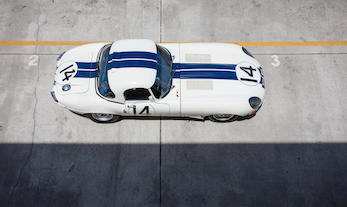
 
1E 1686 and 1E 13725
Bulkhead paneling above center now made of hard fiber material instead of rexin-coated aluminum
July 1967
Vehicles for US export now also equipped with hazard warning lights
 
Indicator lamp of the hazard warning lights gets a new insert (C.27599)
 
1E 1690 and 1E 13847
The tailpipe is no longer screwed to the exhaust, but is attached via a welded sheet metal strip
 
1E 1693 and 1E 13952
Changed the drain for rainwater in the doors
 
1E 1724 and 1E 13151
Various changes to the electrical system
The oil pressure control switch is replaced by a warning lamp
The opening for the oil pressure sensor is sealed with a plug
 
1E 1763 and 1E 15110
New rear wheel carrier (stub axle)
January 1968
1E 1712 and 1E 14583
Modified trim strip with new rubber guides (BD.17001/1) introduced for the radiator opening
 
1E 1864 and 1E 15889
Changed the front inner hood area to allow better access to the headlights
July 1968
 
Engine compression ratio now 9:1
 
1E 1814 and 1E 15487
Chrome wire spoke wheels are now fitted with forged steel hubs
 
1E 1853 and 1E 15753
Painted wire spoke wheels are now fitted with forged steel hubs
 
1E 1896 and 1E 16010
New fuel filter introduced with larger flow area
 
1E 1905 and 1E 16057
The filter element in the fuel filter is changed from gauze to fiberglass
 
1E 1920 and 1E 16099
Approval of Dunlop SP Sport tyres. USA exports are delivered with whitewall tires as standard
 
1E 1926 and 1E 16127
Drive axles now with grease nipples to better supply the joints with grease
 
1E 2051
New cooling system
 
technical specifications
Here you will find the most important technical data of the Jaguar XKE1 OTS (E-Type Roadster), divided into the areas of engine, chassis and performance values.
Engine
Type
Inline 6 cylinder 4 stroke engine
Drive
two overhead camshafts, which are driven by chain
Valves
Valve angle 70o, hanging valves
Bore x Stroke
87 x 106 mm (3.8 liter engine)
 
92 x 106 mm (4.2 liter engine)
Displacement
3781 cm3 (3.8 liter engine)
 
4235 cm3 (4.2 litre engine)
Performance
197 kw at 5500 rpm
maximum torque
353 Nm at 4000 rpm (3.8 liter engine)
 
384 Nm at 4000 rpm (4.2 liter engine)
Compression ratio
9:1
 
8:1 (on request)
Cooling
Water
 
Chassis
Brake
front: disc brakes with servo assistant
 
rear: disc brakes with servo assistant internal
Transmission
4 gear, synchronized from 2nd gear (3.8 liter engine), fully synchronized (4.2 liter engine),
 
Transfer via cardan shaft to the rear axle
Suspension
front: double wishbones with torsion bar springs, hydraulic shock absorbers and anti-roll bars
 
rear: wishbone with tapered roller bearing and swivel joint connected by anti-roll bars
 
in addition, double struts with hydraulic telescopic shock absorbers.
Wheelbase
2438 mm
Length
4458 mm
Width
1657 mm
Height
1194 mm
Dry weight
---- kg
Weight
1250 kg (3.8 liter engine)
 
1280 kg (4.2 liter engine)
 
Performance
Maximum speed
242 km/h (3.8 litre engine)
 
241 km/h (4.2 litre engine)
Acceleration 0–100 km/h
7.1 sec (3.8 liter engine)
 
7.0 sec (4.2 liter engine)

Jaguar XKE1 FHC

Jaguar XKE1 FHC

Jaguar XKE1 FHC

The coupé was presented to the public in Geneva in 1961. Series production does not begin until August 1961, after another six vehicles, which are produced in the body shop of prototype production. The body is completely identical to that of the roadster. The roof construction comes from Bob Blake, the "metal artist" that Briggs Cunningham once had pulled, it scores with Sir William Lyons right away. Due to the stepless rear, there is considerable space for luggage in the rear, almost like in a station wagon. The coupé is also a bit faster in acceleration. From September 1964 he also gets the 4.2 liter engine.

construction time, prices, production figures and vehicle numbers
From March 1961 to July 1968, 15439 vehicles were built. By August 1964, 7669 of these vehicles had been built with the 3.8 litre engine. 7770 vehicles will be equipped with the 4.2 liter engine. A total of 3757 right-hand-drive (RHD) vehicles and 11686 left-hand-drive (LHD) vehicles will be produced by the end of production. The base price in the UK is £2196.-. In October 1964 the 4.2 litre engine was added, from this point on the base price was £ 1992.-.
With the introduction of the new 4.2 litre engine, the body, chassis and engine numbers are divided into two areas. The first part is a combination of a number and a letter. The "4" stands for the body, the "1" for the chassis and the "7" for the engine. The "E" stands for the Jaguar E-Type Series 1. The second part is a serial number of at least 4 digits.
The body numbers do not distinguish between left or right hand drive vehicles, they are numbered consecutively and start with V1001, from October 1964 with 4E 20001.
The chassis numbers continue to consist at the beginning of 6 digit number combinations and differ in those for vehicles with right-hand drive (RHD) starting with the number 860xxx and for vehicles with left-hand drive (LHD) starting with the number 885xxx. From October 1964 the chassis number consists of 7-digit number combinations and differ in those for vehicles with right-hand drive (RHD) starting with the number 1E 20xxx and for vehicles with left-hand drive (LHD) starting with the Number 1E 30xxx. Certain chassis numbers have additional letter designations before and after the number and letter combination. These have the following meaning:
Chassis numbers with a leading "P" stand for vehicles with a built-in steering boost. "P" stands for the term "power steering".
Chassis numbers with a trailing "DN" stand for vehicles with built-in "overdrive"." DN" stands for the inventor of the Laycock Overdrive, De Normanville.
Built
Chassis No. RHD
Quantity
Chassis No. LHD
Quantity
Body No.*
Comment
Aug. 61 to Dec. 61
860001 to 860138
138
885001 to 885398
396
V1001 to V1528
No. 885001 scrapped after tests / No. 885003 goes to the development department as a body (not counted)
Jan. 62 to Dec. 62
860139 to 861051
913
885399 to 888034
2636
V1586 to V5111
No. 860458 and No. 860630 Lightweight Competition Coupés
Jan. 63 to Dec. 63
861052 to 861433
382
888035 to 889751
1717
V5120 to V7194
No. 888169 Lightweight Competition Coupé
Jan. 64 to Aug. 64
366
1121
V7227 to V8687
No. 861705 first test car with 4.2 litre engine
Aug. 64 to Dec. 64
1E 20001 to 1E 20138
138
1E 30001 to 1E 30453
453
4E 20005 to 4E 20596
first XKE1 (E-Type) with 4.2 liter engine
Jan. 65 to Dec. 65
1016
1E 30454 to 1E 32473
2020
4E 20598 to 4E 23637
No. 1E 30635 Conversion for Raymond Loewy / No. 1E 21103 Conversion to dual headlights by the company Abbey Panels for the 6th Earl of Cawdor
Jan. 66 to Dec. 66
1E 21155 to 1E 21472
318
1598
4E 23651 to 4E 25580
 
Jan. 67 to Dec. 67
1E 21473 to 1E 21743
271
1E 34072 to 1E 34983
912
4E 25564 to 4E 26773
No. 1E 21584 and No. 1E 34583 are from July/August the first vehicles without headlights double glazing, one calls the series from now on 1.5
Jan. 68 to Sept. 68
1E 21744 to 1E 21958
215
1E 34984 to 1E 35814
831
4E 26793 to 4E 27801
 
* the bodies were not married to the chassis due to production, so the numbers shown show the lowest or highest body number found in the respective year on http://www.xkedata.com. This gives you a rough assessment of whether the body and chassis are consistent with each other in a direct comparison.
 
The engine numbers are not listed here, as depending on the order they are not only installed in FHC models, but in all Jaguar XKE types, they start with the designation R1001 for the 3.8 liter engines, from February 1963 the designations begin with RA1001. According to research in the Jaguar archives, the last engines probably bear the number R9877 and RA6922. The suffix -9 after the number describes the compression ratio of the engine. With the introduction of the 4.2 liter engine, they begin with the designation 7E 1001.
changes in production
Over the years of production, technical development did not stop. Economic and technical peculiarities are gradually incorporated into production after extensive consideration. In the following list there are some important adjustments according to chronological order.
Modified
from Model (RHD / LHD)
Description
October 1961
860005 and 885015
Rear brake calipers changed for automatic adjustment of the hand brake pads
 
860005 and 885021
Stronger alternator with corresponding relay is installed (C.18286 instead of C.16054)
The bonnet release is moved to the inside of the car, there are no key locks on the outside
Adjustments to the tank and fuel system
Other pipes installed on the crankcase ventilation, not interchangeable with the old ones
Larger wheel bearings are used
 
Other cardan shaft with larger joints installed
 
860007 and 885033
Improved water drainage from the trunk lid gutter by changing the drain tubes
 
Stronger coil springs installed, recognizable by a red marking on the inner spring
 
Other cigarette lighter (C.18638) installed, not interchangeable with the old one
November 1961
New engine pad in the rear area
 
New suspension of the mufflers and exhaust pipes on the body
 
860013 and 885086
Modification to the battery attachment, using two additional rubber pieces (C.19740)
December1961
860021 and 885105
Storage of the brake and clutch pedal shaft changed
 
Storage of the accelerator pedal shaft changed
 
860023 and 885143
Brake cylinder is now made of cast iron, piston and anchor plate are now in one piece
January 1962
860027 and 885156
New master brake cylinders with improved return spring seat are installed
 
860027 and 885161
Fuel line is shortened and fuel pump connection secured with clip
 
New electric tachometer is installed
 
860033 and 885210
New brake pads from Mintex M.22 instead of M.40 are installed
February 1962
860113 and 885318
Body gets device for attaching seat belts
 
New shock absorbers are installed
 
860139 and 885385
Improvement of the hinges for attaching the hood to the subframe and use of new bolts
March 1962
Ignition lock combined with steering wheel lock only installed for export to Germany
 
860193 and 885572
Installed a new compensating piece between the master brake cylinders
 
860195 and 885585
The anchoring of the rear side window locking lever is now bolted to the frame instead of soldered
April 1962
860232 and 885736
New spacer on the steering damper
May 1962
 -------   and   -------
For all an electrically heated rear window is now available
 
860375
Accelerator pedal is changed
 
860375 and 885871
Change to the connection between the brake pedal and servo pump, fine adjustment possible using a eccentric nut
June 1962
860176 and 885504
Heel recess in the car floor (first car without "flat-floor"), body 1635 (RHD) and 1647 (LHD)
 
860426 and 886046
Protection of the rack pinion with self-locking nuts
 
860436 and 885971
New signal horns are installed (C.19080 and C.19081)
 
New seals on the pivot pins connecting the rear hub carriers to the wishbone pivot axles
 
860479 and 886014
Modified rear lights for rear, brake, indicator light (UK: right C.19854 / left C.19855, USA: right C.19856 / left C.19857)
Detail changes to body parts such as bonnet, bulkhead, rocker panels, roof, rear fenders, etc.
 
860581 and 886093
Relocation of the rear transverse bulkhead for an extension of the seat rails by 3.8 cm
 July 1962
860387 and 885888
New cardan shaft (C.19875) with improved bearing seals, eliminating the need for grease nipples
 
860581 and 886089
The stops of the sliders on the trunk floor and the rubber buffers on the tailgate have been changed
 
860584 and 886059
Replaced the Vulkollan fuel hose between the tank nozzle and the pump with a nylon hose
 
860647 and 886214
Steering column made of tubular steel is replaced by steering column made of forged solid material and flatter angle (C.20487)
New oil seal (C.20943) on the opening of the bulkhead
 
860647 and 886219
Adjusted clutch master cylinder
 
860661 and 886247
New jack (C.20661) with integrated crank is included
 
860658 and 886247
Tubular steel drive shafts are replaced with forged steel drive shafts
 
860664 and 886263
The handbrake system is changed
 
860678 and 886283
New reservoirs for the clutch hydraulic oil (C.19646 and C.20234) and for the brake fluid (C.19645 and C.20232)
September 1962
860723 and 886382
New rubber pads for the battery clips (C.19506)
 
860741 and 886456
Rear brake caliper mounting changed
October 1962
 -------   and   -------
For all export vehicles to the USA and Canada rear wheel ratio to 3.31:1 (C.15222)
 
 -------   and   -------
For all vehicles, including UK, rear wheel ratio to 3.07:1 (C.18984), optionally to 3.54:1 (C.16618)
 
860863 and 886754
New steering column top (C.20557) with preparation for WASO ignition/steering wheel lock
November 1962
860833 and 886686
The rear wheel hubs have slinger rings as water deflectors
 
Cable set is adapted (C.20649) as the relay for the fan motor is omitted
 
860913 and 887132
New aluminum cover on the dashboard and the center console, which is not compatible with the old one
December 1962
 -------   and   -------
The grease nipples on the drive shafts are no longer needed, the universal joints are now permanently lubricated
 
The tailgate strut is changed
February 1963
861057 and 888067
New interior mirror (C.20697)
 
Heat shield is changed, some vehicles are exempt
Rear engine mount rubbers now coil springs except 861087, 888238
March 1963
861086 and 888185
Introduced brake fluid reservoir with level indicator and new watertight cap
 
861091 and 888241
Gas cap with pressure relief valve introduced
Expansion tank for cooling water adapted to the new cooling water hose
April 1963
861106 and 888327
Reinforcement of the lower center strut on the rear suspension, adjustment of the rear wishbones and wishbone axle
 
New floor pan sealing, consisting of a canvas/rubber compound, under the left side of the subframe
May 1963
Ashtray (BD.24548) changed
 
861172 and 888560
Bushes of the anti-roll bar get a flare (C.21946)
 
861175 and 888567
New passenger grab handles with modified attachment points installed, not interchangeable with the old one
June 1963
861178 and 888612
Front underbody panel enlarged for better protection against spray water, the part number remains the same
The opening below the oil filter in the right-hand underbody panel is closed with a cover plate
 
861179 and 888658
Attaching a cover to the courtesy light push button switch over the door hinge
 
861179 and 888659
Modifications to the tailgate trim
 
Modification of the differential gear carrier for 3.54:1 for LHD vehicles
 
Modification of the differential gear carrier for 3.31:1 for LHD vehicles
 
861185 and 888706
Modification of the differential gear carrier for 3.07:1
 
 -------   and   -------
New brake pads (Mintex M.59), stronger rear brake discs and new adaptation of the brake calipers
 
 -------   and   -------
For all new differential housing
 
861189 and 888698
Doors now have armrests
 
861187
Elimination of fan motor relay, wiring harness (C.20650) modified accordingly
 
861204 and 888791
New clutch hydraulic fluid reservoir with improved filter
August 1963
861093 and 888257
New one-piece mat (BD.25664) for the trunk instead of the two-piece ones
 
861099 and 888302
Various interior changes such as new closures for the vent windows or paneling of the B pillar
 
861198 and 888767
Modified operating lever for indicators and headlight flasher (C.21710) and the associated push button switch (C.22872)
 
861203 and 888760
New handbrake cable compensation with forked end
 
861216 and 888859
Change to the rear part of the gearbox housing, resulting in storage space in the center armrest
 
861219 and 888886
New chrome fittings on the A pillars
September 1963
861226 and 889003
Rear wheel ratio changed to 3.31:1 (C.15222) for all countries including UK
 
Rear wheel ratio change to 3.54:1 (C.16618) on export vehicles for USA and Canada to 888994
 
Rear wheel ratio at 3.07:1 (C.18984) remains in Belgium, France, Germany, Italy and Netherlands
 
861254 and 889030
Center console and fold-down dashboard no longer covered with aluminum but with leather
 
Modified floor carpet in front with integrated heel support made of plastic
October 1963
861271 and 889096
Modified double pipe silencer (C.21714) with corresponding rubber mounting
November 1963
861169 and 888543
New tachometer (CE.1111/01) with built-in clock and dial
 
Reintroduction of rear wheel ratio to 3.54:1 (C.16618) in export vehicles for USA and Canada
 
861275 and 889135
Extended windscreen wiper arms introduced, making longer windscreen wipers possible (RHD No. 10079 and LHD No. 10080)
 
861295 and 889236
One-piece rubber seal introduced, replaces the separate ones for A pillar and roof eaves
 
861325 and 889347
Modified carpet attachment made of plastic
 
861342 and 889375
New sealing rubber for the door on the B pillars
January 1964
861364 and 889452
Modified ventilation of the differential housing
 
New ashtray, not interchangeable with the old one
 
861386 and 889510
Modified fuel pump with greater delivery capacity
March 1964
861389 and 889526
New car radio (C.23194) with only one speaker, the new console does not fit older models
 
861427 and 889697
New reservoir for the brake fluid with protective rubber cap for the lid and level gauge
 
New brake pedal (RHD C.23091 and LHD C.23090) with better attachment and locking ring (C.23180) 
 
The door trim on the inside is changed to make it easier to close the doors
 
861461 and 889820
The retaining clip for the indicator and headlight flasher switch is now welded to the steering column
April 1964
Introduction of headlights in sealed beam design for some countries
 
861424 and 889689
Improved sealing of the needle bearings and bearing seats of the drive shaft
 
861481 and 889967
The upper steering column bearing is now made from Elastollan, no longer from Vulkollan
 
861521 and 890171
New guide bushing in the lower, rear wishbone
 
861550 and 890235
New solenoid for starter (C.23612) with better splash protection
 
861557 and 890251
New door and window seals, left and right usable, partly already used earlier
May 1964
861605 and 890318
New contact pin (C.22457) for the indicator switch
 
Modified side panels of the trunk floor
 
861662 and 890488
New attachment of the center rod in front of the radiator opening with rubber spacers to better protect the rod
October 1964
861720 and 890715
Spacer ring (C.19027) used on the upper spring plate of the rear axle springs
 
861723 and 890722
New gas cap (C.23601/1) introduced
 
861781 and 890848
New filter in the supply line to the fuel pump
 
January 1965
 ----------   and   ----------
On all of them the opening to accommodate the car radio in the dashboard will be adjusted
 
1E 20080 and 1E 30252
The front attachments of the seat rails for the floor get a spacer
 
1E 20098 and 1E 30293
Modified seat rails
March 1965
 ----------   and   ----------
For all modified transmission housing with modified cardan tunnel cover
 
1E 20098 and 1E 30292
Improved lubrication of front suspension ball joints
 
1E 20100 and 1E 30302
Mud deflector plates introduced on the inside of the front disc brakes
 
1E 20117 and 1E 30402
Changed interior
 
1E 20137 and 1E 30443
Modified front calipers with inward bleeder screws
June 1965
1E 20208 and 1E 30034
New speedometer cable
 
1E 20329 and 1E 30772
Rear wheel ratio changed to 3.07:1 for all countries. US, Canada and Newfoundland remain at 3.54:1
 
Modified drive shaft with cast drive flanges for 3.54:1 ratio
 
1E 20363 and 1E 30857
Modified wiring harness due to new signal horns and connectors for the headlights
 
1E 20371 and 1E 30825
New windscreen washer system (C.25438, Lucas 58J replaces Lucas 28J) with plastic water tank
 
1E 20397 and 1E 30862
Modified drive shaft with cast drive flanges for 3.07:1 translation
 
1E 20502 and 1E 30890
Modified cardan shaft tunnel and associated adjustments to the gearbox cover
 
1E 20612 and 1E 30912
The gearbox housing gets an opening on the right side for access to the speedometer drive
 
1E 20612 and 1E 30982
New left hand heater pipe (C.25408) and associated dashboard modifications
September 1965
1E 20692 and 1E 31078
Modified engine ventilation
 
1E 20753 and 1E 31171
Modified end parts on the dashboard and center console
November 1965
1E 20633 and 1E 31244
Modified rack and pinion steering gear in a new housing
 
1E 20763 and 1E 31177
New rear shock absorbers (C.25951)
 
Self-locking tailgate stand
 
1E 20900 and 1E 31527
New rear coil springs (C.25939)
March 1966
1E 20937 and 1E 31779
Additional mud flaps on the front frame
 
1E 20939 and 1E 31788
The passenger's sun visor now has a vanity mirror
 
1E 20953 and 1E 31920
The window frame seal is now made of rubber instead of felt
 
1E 20978 and 1E 32009
Tires changed to Dunlop SP.41 H (185x15) with the exception of Canada, USA, Newfoundland and New Zealand
Speedometer calibrated according to the new tires and marked with mph and km/h
Adjusted rubber buffers on the rear wheel suspension so that it does not touch the tires
 
1E 20993 and 1E 31765
The eight-tooth wheel in the steering gear is replaced by a seven-tooth wheel
 
1E 21000 and 1E 32010
The rear bumper can be fitted from the outside, previously only via the tank and spare wheel recess
Change in the position of the stop light switch with a corresponding change in the wiring harness
Changes to the clutch mechanism and braking system
 
1E 21207 and 1E 32201
New steering column top
September 1966
1E 21134 and 1E 32268
Modified folding wall in the trunk area
 
1E 21140 and 1E 32316
Modified radiator fan thermostat
 
1E 21207 and 1E 32201
New lever switch for indicator and low beam (C.25256)
 
1E 21215 and 1E 32597
Modified air filter including bracket
 
1E 21228 and 1E 32632
Bonnet, front fenders, shock absorbers and heater intake are now identical to those of the 2+2 models
 
1E 21235 and 1E 32667
Rubber grommets inserted on the contacts of the brake fluid and handbrake warning lamp to prevent short circuits
 
1E 21254 and 1E 32685
Rubber ring fitted to coil spring of rear engine mount
 
1E 21266 and 1E 32692
The illumination color on the instruments and switches changes from blue to green
 
1E 21312 and 1E 32766
New window guides in the doors
December 1966
1E 21335 and 1E 32888
Exhaust system in the engine area equipped with a heat shield
 
1E 21342 and 1E 32942
New clutch pedal with steel pad (C.26532) including new hydraulic cylinder with new piston (C.26531)
New gas pedal
New brake pedal with shorter piston in master cylinder
 
1E 21380 and 1E 33120
In the future, the silencer will no longer be welded to the pipes but attached with clamps
March 1967
1E 21388 and 1E 33150
Bulkhead paneling on the top right now made of hard fiber material instead of rexin-coated aluminum
 
Other types of glass are used on the windshield
 
1E 21442 and 1E 33549
New gear lever cuff (artificial leather instead of rubber bellows)
Adaptation of the gearbox and transmission tunnel cover
 
1E 21443 and 1E 33644
Bulkhead paneling above center now made of hard fiber material instead of rexin-coated aluminum
July 1967
Vehicles for US export now also equipped with hazard warning lights
 
1E 21223 and 1E 32609
Vehicles with existing rear window heating receive an integrated indicator light at the switch
 
Indicator lamp of the hazard warning lights gets a new insert (C.27599)
 
1E 21451 and 1E 33709
The tailpipe is no longer screwed to the exhaust, but is attached via a welded sheet metal strip
 
1E 21451 and 1E 33775
Changed the drain for rainwater in the doors
 
1E 21481 and 1E 33091
Various changes to the electrical system
The oil pressure control switch is replaced by a warning lamp
The opening for the oil pressure sensor is sealed with a plug
 
1E 21489 and 1E 34303
New rear wheel carrier (stub axle)
January 1968
1E 21473 and 1E 34147
Modified trim strip with new rubber guides (BD.17001/1) introduced for the radiator opening
 
1E 21584 and 1E 34550
Changed the front inner hood area to allow better access to the headlights
July 1968
 
Engine compression ratio now 9:1
 
1E 21518 and 1E 34339
Chrome wire spoke wheels are now fitted with forged steel hubs
 
1E 21579 and 1E 34458
Painted wire spoke wheels are now fitted with forged steel hubs
 
1E 21629 and 1E 34634
New fuel filter introduced with larger flow area
 
The filter element in the fuel filter is changed from gauze to fiberglass
 
1E 21669 and 1E 34847
Approval of Dunlop SP Sport tyres. USA exports are delivered with whitewall tires as standard
 
1E 21669 and 1E 34851
Drive axles now with grease nipples to better supply the joints with grease
 
1E 21807
New cooling system
 
technical specifications
Here you will find the most important technical data of the Jaguar XKE1 FHC (E-Type Coupé), divided into the areas of engine, chassis and performance values.
Engine
Type
Inline 6 cylinder 4 stroke engine
Drive
two overhead camshafts, which are driven by chain
Valves
Valve angle 70o, hanging valves
Bore x Stroke
87 x 106 mm (3.8 liter engine)
 
92 x 106 mm (4.2 liter engine)
Displacement
3781 cm3 (3.8 liter engine)
 
4235 cm3 (4.2 litre engine)
Performance
197 kw at 5500 rpm
maximum torque
353 Nm at 4000 rpm (3.8 liter engine)
 
384 Nm at 4000 rpm (4.2 liter engine)
Compression ratio
9:1
 
8:1 (on request)
Cooling
Water
 
Chassis
Brake
front: disc brakes with servo assistant
 
rear: disc brakes with servo assistant internal
Transmission
4 gear, synchronized from 2nd gear (3.8 liter engine), fully synchronized (4.2 liter engine),
 
Transfer via cardan shaft to the rear axle
Suspension
front: double wishbones with torsion bar springs, hydraulic shock absorbers and anti-roll bars
 
rear: wishbone with tapered roller bearing and swivel joint connected by anti-roll bars
 
in addition, double struts with hydraulic telescopic shock absorbers.
Wheelbase
2438 mm
Length
4458 mm
Width
1657 mm
Height
1219 mm
Dry weight
---- kg
Weight
1270 kg (3.8 liter engine)
 
1300 kg (4.2 liter engine)
 
Performance
Maximum speed
242 km/h (3.8 litre engine)
 
241 km/h (4.2 litre engine)
Acceleration 0–100 km/h
6.9 sec (3.8 liter engine)
 
7.0 sec (4.2 liter engine)

Jaguar XKE1 FHC 2X2

Jaguar XKE1 FHC 2X2

Jaguar XKE1 FHC 2x2 (Copyright by Can Pac Swire)

The 2+2 Coupé was launched 5 years later, with the introduction of the 4.2 litre engine. It was not presented to the public until March 1966, although at the request of Sir William Lyon, they had been experimenting with different, more spacious "mock-ups" since 1961. These will later become the Jaguar types XJ4 and XJ6. In the end, you stay with an E-Type Coupé with a longer wheelbase and more spacious monocoque in which two emergency seats are installed in the font, who can be folded away if necessary. Due to the longer transmission tunnel, there is also room to install an automatic transmission, which is eagerly awaited, especially in America.

construction time, prices, production figures and vehicle numbers
From September 1965 to July 1968, 4600 vehicles were built. A total of 1379 right-hand-drive (RHD) vehicles and 3221 left-hand-drive (LHD) vehicles will be produced by the end of production. The base price in the UK is £2245.-.
The body, chassis and engine numbers are divided into two areas. The first part is a combination of a number and a letter. The "4" stands for the body, the "1" for the chassis and the "7" for the engine. The "E" stands for the Jaguar E-Type Series 1. The second part is a serial number of at least 4 digits.
The body numbers do not distinguish between left or right steered vehicles, they are numbered consecutively and start with 4E 50001.
The chassis numbers consist of 7-digit number combinations and differ in those for right-hand drive vehicles (RHD) starting with the number 1E 50xxx and for vehicles with left-hand drive (LHD) starting with the number 1E 75xxx. Certain chassis numbers have additional letter designations before and after the number and letter combination. These have the following meaning:
Chassis numbers with a leading "P" stand for vehicles with a built-in steering boost. "P" stands for the term "power steering".
Chassis numbers with a trailing "DN" stand for vehicles with built-in "overdrive"." DN" stands for the inventor of the Laycock Overdrive, De Normanville.
Chassis numbers with a trailing "BW" stand for vehicles with built-in automatic transmission from the 4.2 liter engine. "BW" stands for the manufacturer Borg Warner.
The engine numbers can be assigned directly to the 2+2 Coupé. They begin with the designation 7E 50001. The suffix -9 after the number describes the compression ratio of the engine.
Built
Chassis No. RHD
Quantity
Chassis No. LHD
Quantity
Body No.*
Engine No.*
Comment
Sept. 65 to Dec. 65
1E 50001 to 1E 50020
20
9
4E 50006 to 4E 50018
7E 50012 to 7E 50021
1E 75004 converted to roadster / 1E 50005 goes to development, factory scrapped
Jan. 66 to Dec. 66
655
1E 75010 to 1E 76985
976
4E 50019 to 4E 52673
7E 50023 to 7E 52649
1E 75032 converted to Roadster
Jan. 67 to Dec. 67
1E 50676 to 1E 51116
441
1E 76986 to 1E 77859
874
4E 52675 to 4E 53948
7E 52658 to 7E 53934
No. 1E 50975 and No. 1E 77709 are the first vehicles of the series 1.5 from July/August
Jan. 68 to Sept. 68
1E 51117 to 1E 51379
263
1E 77860 to 1E 79221
1362
4E 53886 to 4E 55605
7E 54005 to 7E 55603
 
* the bodies and engines were not married to the chassis due to production, so the numbers shown show the lowest or highest body or engine number found in the respective year on http://www.xkedata.com. This gives you a rough assessment of whether the body, engine and chassis are consistent with each other in a direct comparison.
 
changes in production
Over the years of production, technical development did not stop. Economic and technical peculiarities are gradually incorporated into production after extensive consideration. In the following list there are some important adjustments according to chronological order.
Modified
from Model (RHD / LHD)
Description
September 1966
1E 50008 and 1E 75075
Rubber grommets inserted on the contacts of the brake fluid and handbrake warning lamp to prevent short circuits
 
1E 50157 and 1E 76001
Modified radiator fan thermostat
December 1966
1E 50122 and 1E 75863
Attachment of the chrome trim strips on the doors changed
 
1E 50156 and 1E 75992
In the future, the silencer will no longer be welded to the pipes but attached with clamps
March 1967
New gear lever cuff (artificial leather instead of rubber bellows)
Adaptation of the gearbox and transmission tunnel cover
July 1967
1E 50001 and 1E 75001
Vehicles with existing rear window heating receive an integrated indicator light at the switch
 
Indicator lamp of the hazard warning lights gets a new insert (C.27599)
 
1E 50641 and 1E 76934
The tailpipe is no longer screwed to the exhaust, but is attached via a welded sheet metal strip
 
Upper part of the rear seat backrest upholstery changed
January 1968
1E 50710 and 1E 77047
Modified trim strip with new rubber guides (BD.17001/1) introduced for the radiator opening
 
1E 50975 and 1E 77645
Changed the front inner hood area to allow better access to the headlights
July 1968
 
Engine compression ratio now 9:1
 
1E 50681 and 1E 77377
Modified dashboard shelf with protective bead
 
1E 50875 and 1E 77407
Front torsion bar spring with thicker diameter
 
Chrome wire spoke wheels are now fitted with forged steel hubs
 
1E 50972 and 1E 77602
Painted wire spoke wheels are now fitted with forged steel hubs
 
1E 51017 and 1E 77695
New fuel filter introduced with larger throughput area
 
1E 51043 and 1E 77701
The filter element in the fuel filter is changed from gauze to fiberglass
 
1E 51059 and 1E 77705
Approval of Dunlop SP Sport tyres. USA exports are delivered with whitewall tires as standard
 
Drive axles now with grease nipples to better supply the joints with grease
 
New cooling system
 
technical specifications
Here you will find the most important technical data of the Jaguar XKE1 FHC 2x2 (E-Type 2x2 Coupé), divided into the areas of engine, chassis and performance values.
Engine
Type
Inline 6 cylinder 4 stroke engine
Drive
two overhead camshafts, which are driven by chain
Valves
Valve angle 70o, hanging valves
Bore x Stroke
92 x 106 mm
Displacement
4235 cm3
Performance
197 kw at 5500 rpm
maximum torque
384 Nm at 4000 rpm
Compression ratio
9:1
 
8:1 (on request)
Cooling
Water
 
Chassis
Brake
front: disc brakes with servo assistant
 
rear: disc brakes with servo assistant internal
Transmission
4 gear, fully synchronized or 3 stages, automatic, transmission via cardan shaft to the rear axle
Suspension
front: double wishbones with torsion bar springs, hydraulic shock absorbers and anti-roll bars
 
rear: wishbone with tapered roller bearing and swivel joint connected by anti-roll bars
 
in addition, double struts with hydraulic telescopic shock absorbers.
Wheelbase
2667 mm
Length
4458 mm
Width
1683 mm
Height
1283 mm
Dry weight
---- kg
Weight
1370 kg
 
Performance
Maximum speed
218 km/h (automatic)
 
223 km/h (switch)
Acceleration 0–100 km/h
8.9 sec (automatic)
 
7.6 sec (switch)